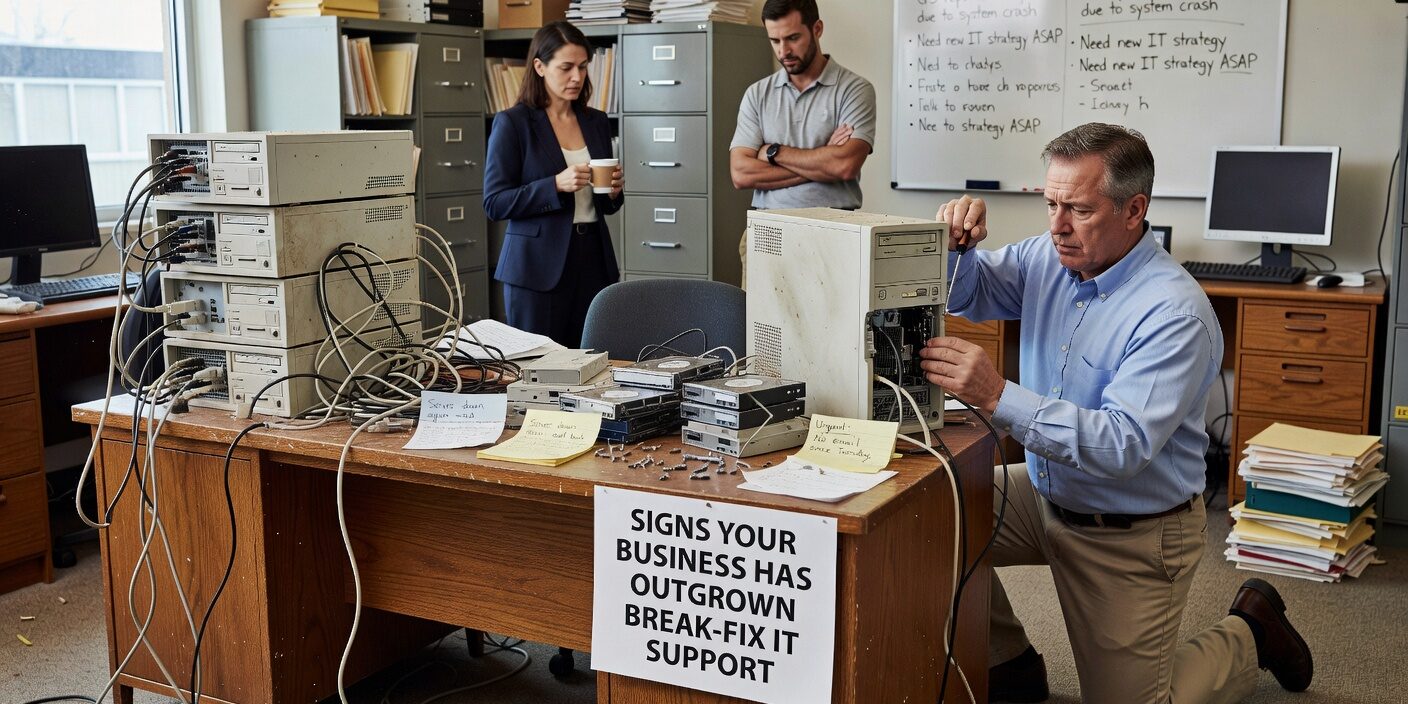
If your team experiences IT issues multiple times per week, or if “working around” technical problems has become normal, you’ve likely outgrown break-fix IT support. What started as an economical approach for a small business can quickly become a costly bottleneck as your operations grow and technology becomes more critical to daily success.
Break-fix support works when technology problems are rare exceptions. But when IT issues start affecting productivity, customer service, and your ability to scale, it’s time to recognize the warning signs and consider a more strategic approach.
Frequent Downtime Is Becoming “Normal”
The clearest sign your business has outgrown break-fix support is when technology failures shift from occasional inconveniences to regular productivity killers. You know you’re there when:
- Staff routinely work around system problems instead of getting them properly fixed
- The same issues keep recurring because problems are being patched rather than permanently solved
- Downtime is measured in hours, not minutes, stopping entire teams from working
- Customer-facing services fail often enough that clients complain or you lose sales
When your team expects the Wi-Fi to drop, the server to crash, or email to stop working “a few times a week,” you’ve moved beyond what reactive support can effectively handle. Modern businesses need systems that work consistently, not ones that require daily workarounds.
Impact on Revenue and Operations
Small business downtime costs hundreds of dollars per minute when you factor in lost productivity, missed opportunities, and overtime to catch up. If you can’t confidently answer “How long would it take to recover from a major system failure?” you’re operating without the reliability modern business demands.
Unpredictable IT Costs Are Disrupting Your Budget
Break-fix becomes a financial problem when IT spending swings wildly from month to month. Warning signs include:
- Surprise bills for thousands of dollars following crashes, outages, or emergency repairs
- Regular emergency costs for after-hours support, virus cleanups, or data recovery
- Inability to budget confidently for annual IT expenses
- Paying repeatedly for similar issues because root causes aren’t addressed
Healthy IT budgeting requires predictable costs that align with business planning. When you’re constantly surprised by IT invoices or can’t answer “What will our technology cost this year?” it’s a clear sign your current approach isn’t scaling with your business needs.
Security Feels Like an Afterthought
As businesses grow, security risks multiply exponentially. You’ve outgrown break-fix support when:
- Security is only discussed after incidents like virus infections or suspicious emails
- You can’t get clear answers about backup status, threat monitoring, or recovery capabilities
- Basic security questions go unanswered: Who monitors for threats? Are critical systems regularly patched? How quickly could we recover from ransomware?
- Compliance requirements from customers or regulations exceed your current IT capabilities
Modern cybersecurity requires continuous monitoring, proactive patching, and documented policies—not reactive fixes after problems occur. If your security strategy is “we’ll deal with it when something happens,” you’re operating with significant risk.
Growing Compliance Demands
Customers increasingly ask about security practices, cyber insurance requires specific protections, and industry regulations demand documented compliance. Break-fix support typically can’t provide the ongoing security management these requirements demand.
Your Growth Is Being Slowed by IT Limitations
Perhaps the most expensive sign you’ve outgrown break-fix: technology is now preventing business growth rather than enabling it. Common scenarios include:
- New employees wait days for accounts, devices, or system access
- Adding locations or remote workers creates technical chaos
- Strategic initiatives stall because current systems can’t support new services or processes
- Leadership spends time firefighting IT crises instead of focusing on business development
Once you reach roughly 10-15 employees heavily dependent on technology, the complexity and coordination needs typically exceed what reactive support can handle efficiently.
No Strategic IT Planning
If your technology decisions are only made when something breaks, you’re missing opportunities to use IT strategically. Growing businesses need planned hardware refresh cycles, cloud migration strategies, and standardized tools that scale with headcount.
Response Times Don’t Match Business Needs
Break-fix support often means:
- No guaranteed response times when critical systems fail
- Hoping the right technician is available when you need help
- Ad hoc support without understanding of your business priorities or workflows
As your business becomes more dependent on technology, you need predictable, prioritized response that aligns with your operational requirements, not best-effort availability.
What This Means for Your Business
Recognizing these signs doesn’t mean your current IT support is bad—it means your business has evolved beyond what break-fix support was designed to handle. The transition typically happens when technology shifts from “helpful tool” to “critical business infrastructure.”
Successful growing businesses need IT support that provides predictable costs, proactive monitoring, strategic planning, and guaranteed response times. Rather than reactive fixes, they need partners who understand their business goals and can ensure technology enables growth rather than limiting it.
The right IT support strategy can transform these pain points into competitive advantages: consistent uptime that impresses customers, predictable costs that support financial planning, robust security that wins client trust, and scalable systems that accelerate growth.
If multiple signs in this article sound familiar, it may be time to explore managed IT support for growing businesses that can provide the proactive, strategic approach your operations now require.