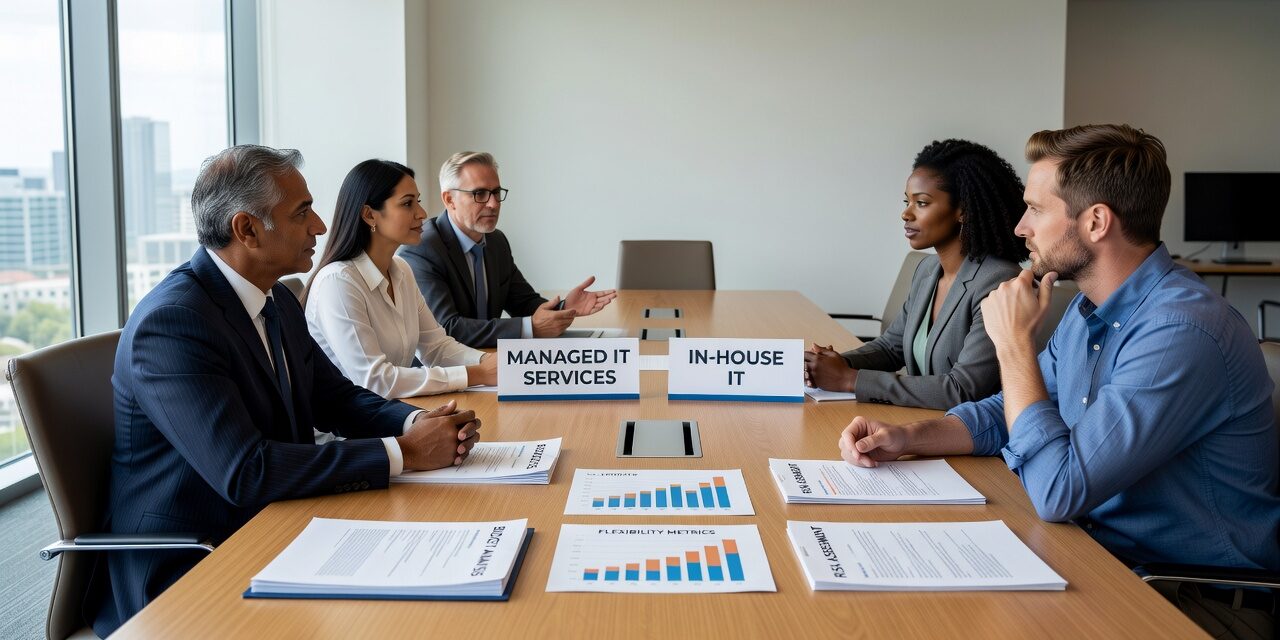
Growing businesses eventually face a critical decision about their IT support model. Should you hire more internal staff or partner with an external provider? The choice affects your budget, operational risk, and ability to adapt to changing technology needs.
Understanding the Real Costs Beyond Salary
Hiring internal IT staff involves more than base salaries. A mid-level IT administrator in Texas typically costs $65,000 to $85,000 annually, but total employment costs reach $90,000 to $115,000 when you include benefits, payroll taxes, and equipment. This covers one person with specific skills.
Most businesses need broader expertise than one person can provide. Network issues, cybersecurity threats, cloud migrations, and help desk support require different skill sets. Building a complete internal team means hiring multiple specialists or accepting gaps in coverage.
Managed IT providers spread these costs across multiple clients. A monthly service fee that seems significant often costs less than hiring one full-time employee, while providing access to an entire team of specialists.
The Flexibility Problem with Internal Staff
Internal employees work best when your technology needs remain predictable. But business growth rarely follows a straight line. During expansion periods, you might need intensive project support for office moves or system upgrades. During slower periods, you’re paying for capacity you don’t use.
An internal IT person handling day-to-day support might lack experience with major projects like cloud migrations or disaster recovery planning. These situations often require bringing in expensive consultants anyway.
External providers adjust their support level based on your current needs. They handle routine maintenance, major projects, and emergency response with the same team. When you open a second location, they already have experience coordinating technology rollouts across multiple sites.
Risk Management: What Happens When Someone Leaves?
Internal IT staff create single points of failure. When your IT person takes vacation, gets sick, or finds another job, your support disappears. Critical passwords, system configurations, and vendor relationships often leave with them.
One manufacturing company learned this lesson when their IT administrator left during a server failure. Without documentation or vendor contacts, they spent three days rebuilding systems that should have taken hours to restore.
Managed providers maintain detailed documentation and multiple staff members who understand your environment. Team members can cover for each other, and institutional knowledge stays with the provider even when individual technicians change roles.
When Internal IT Makes Sense
Some businesses genuinely benefit from internal IT staff. Companies with unique software requirements, strict security protocols, or highly customized systems often need dedicated internal resources.
Businesses with 100+ employees might have enough consistent IT workload to justify full-time staff. These organizations often choose co-managed IT models, where internal staff handle user support while external providers manage infrastructure, security, and strategic projects.
The Hidden Costs of Managed IT Services vs In House IT
Internal IT staff need ongoing training to stay current with technology changes. Cybersecurity threats evolve constantly. Cloud platforms release new features monthly. These training costs add up, and they’re hard to budget for in advance.
External providers invest in training as part of their business model. They maintain certifications, attend conferences, and learn new technologies across all their clients. This knowledge gets shared across their customer base without additional training costs for individual businesses.
However, managed services create ongoing monthly expenses that continue regardless of your technology usage. Internal staff costs might decrease during slow periods when you need less support, while managed service fees typically remain fixed.
Making the Decision: Key Questions to Consider
Start by documenting your actual IT needs over the past year. How much time went to routine maintenance versus project work? How often did you need specialized expertise your current staff lacks?
Consider your growth plans. Will you add locations, increase headcount, or adopt new technologies in the next two years? These changes often require expertise beyond what small internal teams can provide.
Evaluate your risk tolerance. Can your business operate for several days without IT support if your internal person becomes unavailable? Do you have backup plans for major system failures or security incidents?
What This Means for Your Business
The choice between managed IT services vs in house IT isn’t permanent. Many businesses start with internal staff and add external support as they grow. Others begin with managed services and hire internal staff when their needs become more specialized.
The key is matching your support model to your current needs while maintaining flexibility for future growth. Consider your budget, risk tolerance, and growth plans when making this decision.
Need help evaluating your IT support options? TECHZN provides IT support strategy guidance for growing businesses throughout Texas. Contact us to discuss your specific situation and explore the right approach for your organization.