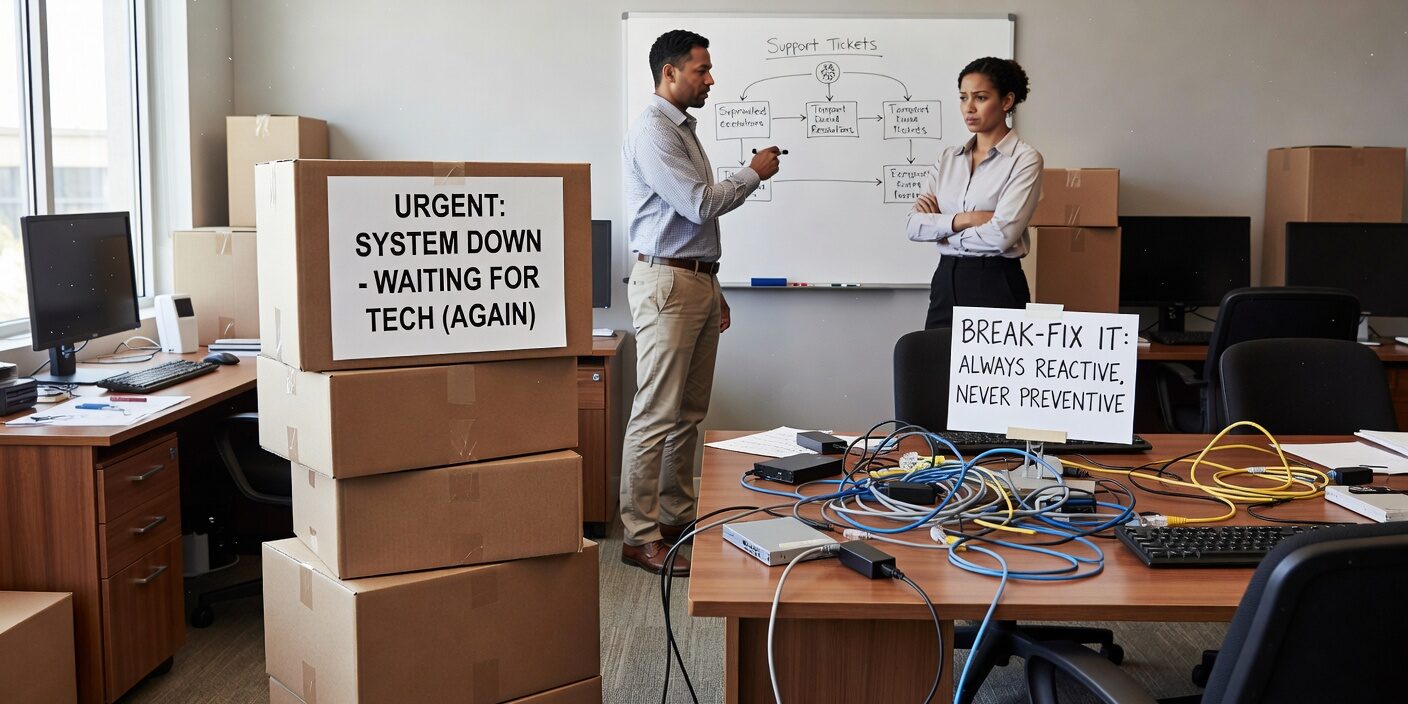
Growing businesses often reach a point where reactive IT support becomes more of a hindrance than a help. If your team is dealing with recurring technology issues, unpredictable downtime, or escalating IT costs, these are clear signs your business has outgrown break fix IT support and needs a more strategic approach.
Break-fix support works well for simple IT environments with minimal technology dependencies. However, as businesses grow and become more reliant on technology for daily operations, waiting for systems to fail before addressing problems can create serious operational and financial challenges.
Recurring IT Problems Are Becoming the Norm
One of the clearest indicators that your business has outgrown reactive IT support is when the same issues keep happening. If your team regularly deals with slow computers, network connectivity problems, or software glitches that disrupt work, the underlying causes aren’t being addressed.
Break-fix support focuses on fixing symptoms rather than root causes. This means problems get temporarily resolved but often return within weeks or months. Common recurring issues include:
- Email outages that happen monthly
- Network slowdowns during busy periods
- Software crashes that require frequent restarts
- Backup failures that go unnoticed until needed
- Security patches that fall behind schedule
When these disruptions become part of “normal” operations, your business has grown beyond what reactive support can effectively handle.
Downtime Is Costing More Than IT Support
As businesses grow, the cost of downtime increases dramatically. A server failure that affects five employees has a very different impact than one that affects 25 employees or customer-facing operations.
Downtime costs for small businesses can range from hundreds to thousands of dollars per hour when factoring in:
- Lost productivity across multiple employees
- Missed deadlines and delayed projects
- Customer service disruptions
- Emergency repair costs at premium rates
- Rush shipping for replacement equipment
If your last IT emergency cost more than several months of proactive support would have, it’s time to reconsider your approach. Many businesses discover that preventing problems costs significantly less than fixing them after they occur.
IT Costs Have Become Unpredictable
Break-fix support creates feast-or-famine billing cycles. You might have several months with minimal IT costs, followed by a massive bill when something major fails. This unpredictability makes business budgeting and cash flow planning extremely difficult.
Unpredictable IT expenses often include:
- Emergency service calls at premium rates
- Overtime charges for after-hours repairs
- Rush replacement of failed equipment
- Data recovery services when backups fail
- Temporary workarounds that become permanent costs
Growing businesses need predictable technology expenses to plan effectively. When IT costs swing wildly from month to month, it’s usually a sign that proactive management would provide better financial control.
Security Is Only Addressed After Problems Occur
Break-fix support typically handles security reactively rather than proactively. This approach might work for very small businesses with limited technology assets, but growing companies face increasing security risks that require ongoing attention.
Security gaps that indicate outgrown break-fix support include:
- Inconsistent patching across different systems
- Unclear backup status or untested recovery procedures
- No monitoring for unusual network activity
- Weak password policies or outdated access controls
- Limited visibility into which systems are vulnerable
If you can’t confidently answer questions about your current security posture, your business likely needs more comprehensive IT oversight than reactive support provides.
Compliance Requirements Are Increasing
Many growing businesses face new compliance requirements as they expand into different markets, work with larger clients, or handle more sensitive data. Industries like healthcare, finance, and legal services have specific IT requirements that break-fix support rarely addresses comprehensively.
Compliance often requires:
- Continuous monitoring and documentation
- Regular security assessments
- Standardized procedures and controls
- Audit trails for system access and changes
- Proactive risk management
Technology Decisions Are Slowing Growth
When break-fix providers only respond to problems, they don’t help with strategic technology decisions. This reactive approach can create bottlenecks when your business needs to:
- Scale systems to support more employees
- Integrate new software with existing tools
- Plan office moves or expansions
- Support remote work or multiple locations
- Evaluate cloud services or system upgrades
If technology decisions are delayed because you lack strategic IT guidance, your support model may be limiting business growth rather than enabling it.
Response Times No Longer Match Business Needs
As businesses become more dependent on technology, tolerance for downtime decreases. What might have been acceptable response times when you had five employees becomes inadequate when 20 employees can’t work due to a server issue.
Response time problems that indicate outgrown break-fix support:
- Waiting hours or days for help with critical issues
- No priority system for urgent vs. routine problems
- Limited availability during busy periods
- No escalation process for complex problems
- Difficulty reaching support during peak business hours
When IT problems directly affect customer service, revenue, or employee productivity, faster response times become a business necessity rather than a convenience.
What This Means for Your Business
Recognizing these signs early can help prevent costly disruptions and support continued growth. Businesses that have outgrown break-fix support typically benefit from proactive IT support strategies that focus on preventing problems, maintaining security, and supporting business objectives.
The transition from reactive to proactive IT support should align with your business goals, growth timeline, and technology requirements. Consider factors like employee count, technology complexity, compliance needs, and the true cost of downtime when evaluating your current support model.
Ready to move beyond reactive IT support? Contact TECHZN to discuss how proactive IT management can reduce downtime, improve security, and support your business growth. Our team specializes in helping growing businesses transition from break-fix support to comprehensive technology management that scales with their needs.