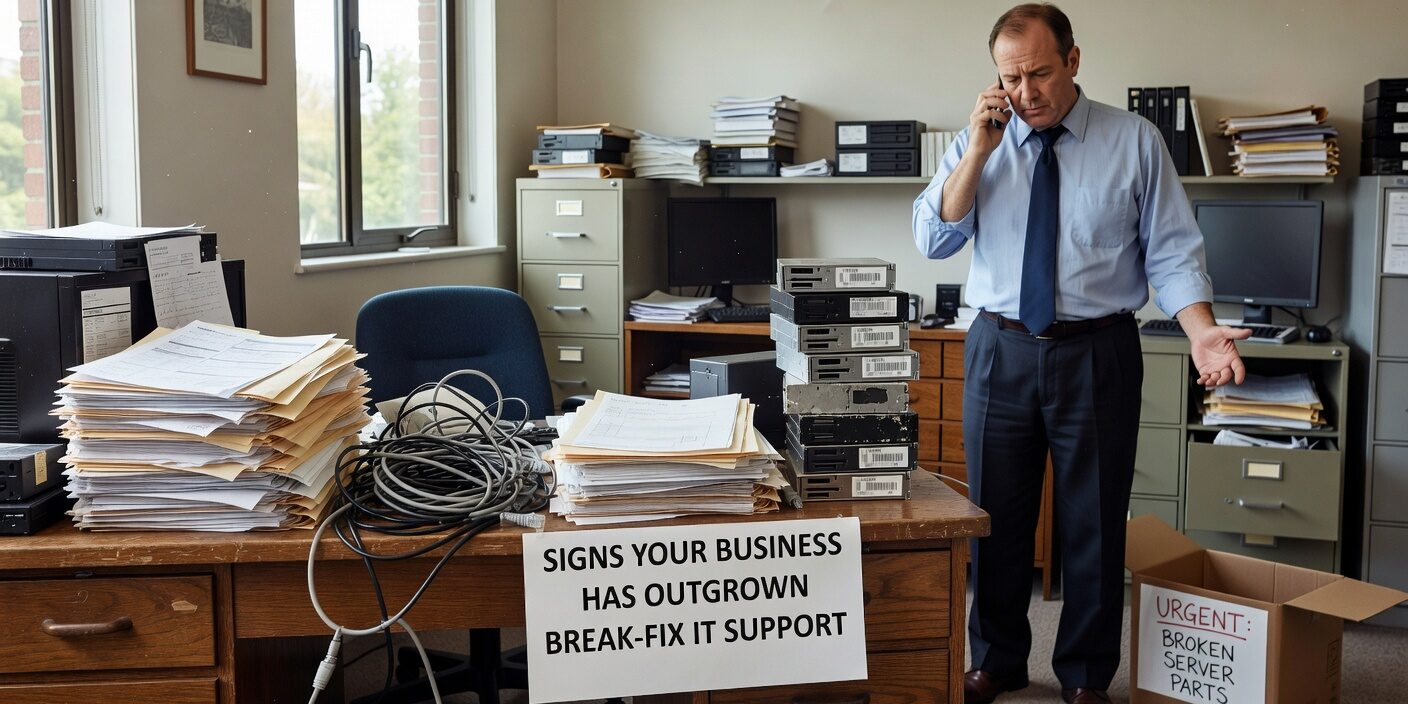
When your business first started, calling an IT technician only when something broke probably made sense. But as companies grow and become more dependent on technology, this reactive “break-fix” approach can quickly become a bottleneck. Recognizing the signs your business has outgrown break fix IT support helps you make smarter decisions about when to invest in proactive IT management.
The shift from break-fix to managed IT isn’t just about technology—it’s about protecting your operations, controlling costs, and enabling growth. Let’s explore the clear warning signs that indicate it’s time for a more strategic approach.
Recurring Issues Keep Coming Back
One of the clearest indicators that break-fix support isn’t working is when you see the same problems repeatedly. Your staff shouldn’t have to deal with the same printer issues, network drops, or software crashes week after week.
What this looks like in practice:
- The accounting software crashes every few days, requiring a restart
- Wi-Fi in certain areas drops connections multiple times daily
- Email goes down for “unknown reasons” on a regular basis
- Staff have developed workarounds for systems that “just don’t work right”
With break-fix support, technicians typically address the immediate symptom—rebooting a server, replacing a cable, or reinstalling software—without investigating root causes. This creates a cycle where the same underlying issues keep surfacing.
Proactive IT management takes a different approach. Instead of waiting for problems to occur, it involves continuous monitoring to identify patterns and address root causes before they impact your operations.
Downtime Is Becoming a Business Problem
When your business was smaller, a few hours of system downtime might have been inconvenient but manageable. As you’ve grown, those same outages now directly impact revenue, customer service, and employee productivity.
Consider these scenarios:
- Your file server crashes on Monday morning, and staff can’t access shared documents for six hours
- Internet connectivity goes down during peak customer service hours
- Your line-of-business application becomes unavailable during month-end processing
- Phone systems fail during your busiest sales period
The hidden cost of frequent downtime extends beyond immediate lost productivity. It includes:
- Missed deadlines and delayed projects
- Customer frustration when they can’t reach you or experience service delays
- Employee stress and reduced morale from dealing with unreliable systems
- Reputation damage when technology problems affect client deliverables
Businesses that have outgrown break-fix support often discover that their “minor” IT issues are actually costing thousands of dollars in lost productivity each month.
IT Costs Have Become Unpredictable
Break-fix billing creates a feast-or-famine cost pattern that makes financial planning difficult. You might go months with minimal IT expenses, then suddenly face a multi-thousand-dollar bill for emergency repairs or security incident response.
Typical break-fix cost patterns:
- $0 in January and February
- $3,500 in March for server failure and data recovery
- $800 in April for after-hours network troubleshooting
- $1,200 in May for malware cleanup and security hardening
This unpredictability creates several business challenges:
- Cash flow disruption when large IT bills arrive unexpectedly
- Difficulty budgeting for technology expenses
- Delayed maintenance because you’re trying to avoid triggering hourly charges
- Emergency spending on solutions that might not be the best long-term choice
Planning for IT Investment
Growing businesses need predictable IT costs to support financial planning and strategic decision-making. When technology expenses become a line item you can count on rather than a surprise that disrupts your budget, it becomes easier to align IT investments with business goals.
Security Is Reactive Instead of Proactive
As your business handles more sensitive data and faces more sophisticated threats, reactive security becomes increasingly risky. Break-fix providers often focus on installing basic antivirus software and firewalls, then only address security issues after they’ve already caused problems.
Warning signs of reactive security:
- Software patching happens “when convenient” rather than systematically
- You only discover malware infections after they’ve spread
- Employee security training consists of “be careful with email”
- Backup testing happens only when you need to restore something
- Security policies exist on paper but aren’t consistently enforced
Modern cyber threats require continuous monitoring, regular patching, employee training, and incident response planning. A single ransomware attack or data breach can cost far more than years of proactive security management.
The compliance factor also matters. Many industries require documented security controls, regular risk assessments, and audit trails. Break-fix support rarely includes the systematic approach needed for compliance requirements.
There’s No Strategic IT Planning
When your technology decisions are driven entirely by emergencies and immediate needs, you miss opportunities to align IT with business growth. Strategic IT planning means thinking ahead about capacity, security, and efficiency rather than just “keeping the lights on.”
Signs you’re missing strategic planning:
- Hardware replacement happens only when equipment fails
- New software purchases are made without considering integration
- You have no documented IT policies or procedures
- Technology discussions only happen during crises
- There’s no roadmap for cloud adoption, remote work capabilities, or system upgrades
Supporting Business Growth
Companies that have outgrown break-fix support often find that their technology infrastructure can’t keep pace with their ambitions. Opening a new location, adding remote workers, or implementing new business processes becomes complicated because the underlying IT foundation wasn’t designed for growth.
Proactive IT planning includes regular reviews of your technology roadmap, capacity planning for growth, and alignment between IT investments and business objectives. This forward-thinking approach helps ensure technology enables rather than constrains your expansion plans.
Response Times Don’t Meet Business Needs
As your business becomes more dependent on technology, slow IT response times create operational bottlenecks. What worked when you had five employees and simple systems may not be acceptable when you have 25 employees and mission-critical applications.
Response time challenges with break-fix support:
- Technicians arrive “when they can fit you in”
- Critical issues on Friday afternoon might not get attention until Monday
- No guaranteed response times for different severity levels
- Limited after-hours or weekend support options
- Single points of failure when your usual technician is unavailable
Modern business IT planning guidance often includes service level agreements that define expected response times for different types of issues. This ensures that technology problems get appropriate priority based on their business impact.
What This Means for Your Business
Recognizing these warning signs doesn’t mean your current IT provider is inadequate—it means your business has evolved beyond what break-fix support can effectively deliver. The reactive model that worked for a smaller company may now be constraining growth, increasing risks, and creating unnecessary stress.
The transition to proactive IT management represents a shift from viewing technology as an expense to treating it as a strategic business asset. This change typically results in:
- Reduced downtime through preventive maintenance and monitoring
- Predictable costs that support better financial planning
- Improved security posture with continuous threat management
- Strategic alignment between technology investments and business goals
- Faster issue resolution with defined service levels and response times
Taking time to evaluate your current IT challenges against these indicators can help you determine whether it’s time to explore more comprehensive support options that better match your business needs.
Ready to move beyond break-fix IT support? Our team specializes in helping growing businesses transition to proactive IT management that supports rather than constrains growth. Contact TECHZN today to discuss how managed IT services can improve your operations, reduce risks, and provide the reliable technology foundation your business deserves.