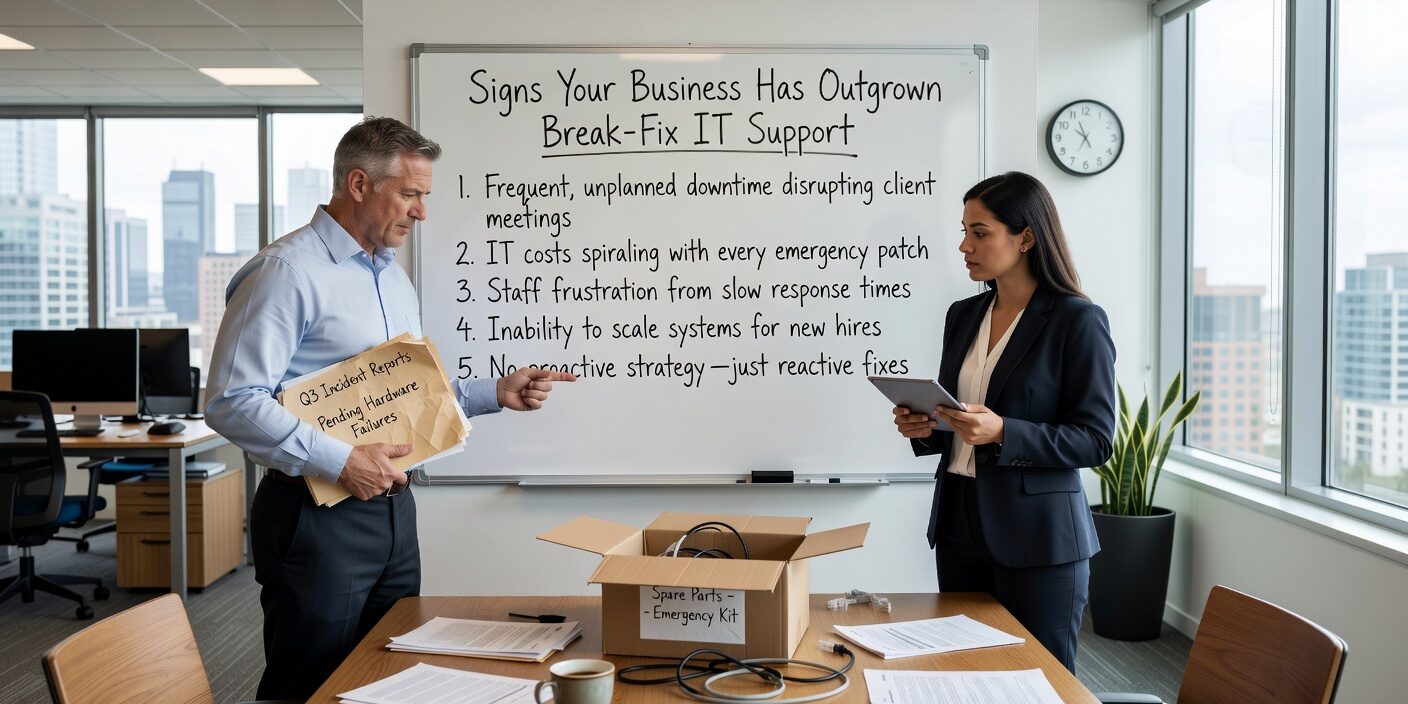
When your business started, calling a technician only when something broke probably made perfect sense. Break-fix IT support worked fine when you had a handful of employees and simple technology needs. But as companies grow, this reactive approach often becomes a liability that costs more than it saves and puts operations at risk.
Recognizing the signs your business has outgrown break fix IT support isn’t always obvious until problems start compounding. The transition from “occasional IT hiccups” to “constant technology headaches” happens gradually, but the warning signs are clear once you know what to look for.
Your IT Problems Have Become Predictably Unpredictable
One of the clearest indicators you’ve outgrown break-fix support is when technology issues shift from rare exceptions to regular disruptions. Frequent downtime becomes part of your normal operations instead of an unusual event.
Your team starts experiencing:
• Weekly server crashes or network slowdowns that bring work to a halt • The same problems recurring despite multiple “fixes” • Escalating impact where IT issues now directly affect customer service and revenue • Band-aid solutions that temporarily resolve symptoms but never address root causes
When your staff begins planning their work around expected technology failures, you’re operating in crisis mode rather than running an efficient business. This reactive cycle only gets worse as your infrastructure becomes more complex.
The Real Cost of Constant Firefighting
Beyond the obvious frustration, recurring IT problems create hidden costs that add up quickly. Lost productivity, delayed projects, and stressed employees all impact your bottom line. Customers notice when systems are unreliable, affecting your reputation and potentially losing business.
IT Expenses Have Become Budget Nightmares
Unpredictable IT costs are another major red flag that break-fix support isn’t working anymore. When your monthly technology expenses swing wildly from near-zero to emergency-level spending, it’s impossible to budget effectively.
Typical warning signs include:
• Surprise bills for emergency server recovery, ransomware cleanup, or urgent hardware replacement • After-hours premium rates that blow up your monthly budget • Paying multiple times for the same recurring problems • No ability to forecast IT expenses with reasonable accuracy
The feast-or-famine nature of break-fix billing makes financial planning nearly impossible. You might spend almost nothing for two months, then face a $5,000 emergency bill when your server crashes. This volatility often costs more annually than predictable managed services pricing.
Hidden Costs of Reactive Support
Break-fix support doesn’t account for the cost of prevention, planning, or optimization. You’re paying to fix problems after they cause damage, not to prevent them from happening. The true cost includes lost revenue during downtime, overtime pay for staff working around broken systems, and missed opportunities while technology issues consume management attention.
Your Team Spends Too Much Time on IT Workarounds
Lost productivity is often the most expensive consequence of outgrowing break-fix support. When employees regularly lose hours each week to slow systems, login problems, or waiting for technicians to arrive, you’re essentially paying staff to deal with IT problems instead of growing your business.
Common productivity killers include:
• Long response times where urgent issues take hours or days to resolve • No after-hours support leaving problems to compound overnight or over weekends • Manual workarounds that waste time and create inconsistent processes • Using personal devices or unauthorized software to bypass broken company systems
When “working around IT” becomes a normal part of your culture, you’re losing competitive advantage. Your team should focus on serving customers and growing revenue, not troubleshooting technology.
Security Is Only Addressed After Problems Occur
Reactive cybersecurity becomes increasingly dangerous as businesses grow and attract more sophisticated threats. Break-fix support typically only addresses security after incidents happen, leaving your business vulnerable to attacks that could cause permanent damage.
Security gaps that indicate you’ve outgrown break-fix include:
• No continuous monitoring for threats, malware, or suspicious activity • Inconsistent patching and updates across your systems • No tested backup strategy or clear recovery procedures • Compliance requirements that your current support can’t help address
Modern cybersecurity requires proactive monitoring, regular vulnerability assessments, and strategic planning. Once security becomes critical to customer trust and regulatory compliance, “fix it after it breaks” support creates unacceptable risks.
The Stakes Keep Getting Higher
As your business grows, security incidents become more costly and damaging. A ransomware attack that might have been an inconvenience for a five-person company could destroy a fifty-person operation. The reactive approach to security works until it doesn’t – and by then, the damage is often irreversible.
You Need IT Strategy, Not Just IT Repairs
Growing businesses require strategic technology planning, not just emergency repairs. When you’re ready to expand locations, hire remote employees, or implement new software, break-fix support can’t provide the guidance and architecture needed for smooth growth.
Signs you need strategic IT support:
• No technology roadmap aligned with business goals • IT decisions happen only during emergencies or vendor renewals • Adding staff or locations is painful because systems can’t scale easily • Projects are delayed because IT infrastructure can’t support them • Fragmented systems that were added piecemeal without overall design
Successful growth requires technology that enables expansion rather than constraining it. Break-fix support can’t provide the planning, architecture, and ongoing management needed to support business objectives.
Simple Questions That Reveal the Truth
Ask yourself these practical questions about your current IT situation:
• Can you predict your IT expenses within a reasonable range for the next 12 months? • Do you have documented, tested backup and disaster recovery plans? • Are your critical systems monitored 24/7 for performance and security issues? • Is there a clear IT roadmap for the next 1-3 years aligned with business goals? • Do you consistently meet acceptable response times for IT issues, including after hours?
If you answered “no” or “I’m not sure” to several questions, you’ve likely outgrown reactive IT support.
What This Means for Your Business
The transition from break-fix to managed IT support isn’t just about changing vendors – it’s about changing your relationship with technology from reactive to strategic. When IT becomes a growth enabler rather than a constant source of problems, your business can focus on what matters most: serving customers and increasing revenue.
Modern managed IT services provide predictable costs, proactive monitoring, strategic planning, and comprehensive security that growing businesses need. The goal isn’t just to fix problems faster, but to prevent them from happening in the first place.
The right IT partner helps you plan for growth, optimize operations, and protect against risks while maintaining the technology foundation your business depends on. Instead of wondering when the next emergency will hit, you can confidently pursue growth opportunities knowing your technology supports rather than limits your success.
Ready to move beyond constant IT firefighting? Learn how managed IT support for growing businesses can provide the strategic technology partnership your company needs to thrive.