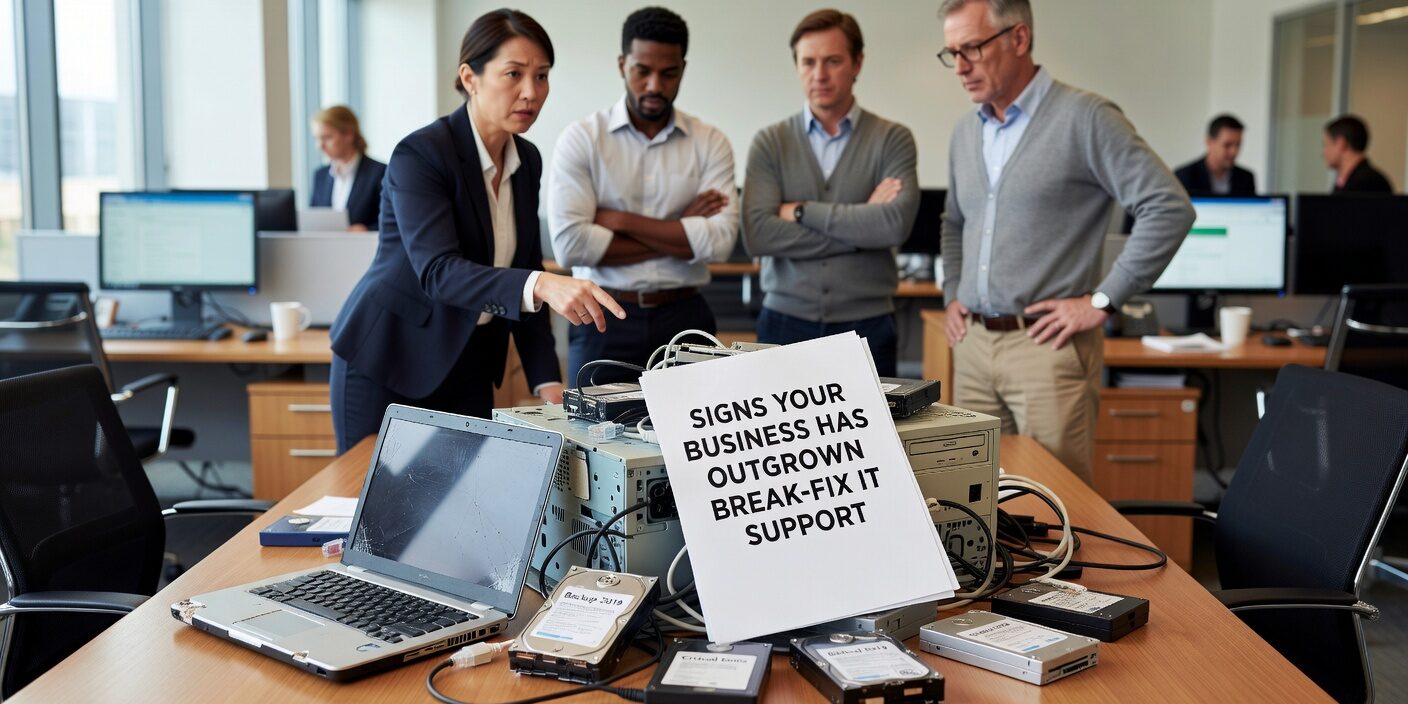
When your business first started, calling a technician only when something broke probably made perfect sense. But as your company grows, signs your business has outgrown break fix IT support become impossible to ignore. Reactive IT support that works for a five-person startup can become a serious liability for a growing operation that depends on reliable technology.
Recognizing these warning signs early can save your business thousands of dollars in lost productivity and help you avoid the costly downtime that comes with purely reactive IT support.
Your Team Experiences Recurring IT Problems
The clearest indication you’ve outgrown break-fix support is when the same problems keep happening over and over again. Break-fix technicians focus on getting systems running again, not on identifying and eliminating root causes.
Common recurring issues include:
- Network slowdowns that return every few weeks
- Email server crashes that happen monthly
- Software crashes that affect the same users repeatedly
- Printer or connectivity problems that never get permanently resolved
Each time you pay to fix the same problem, you’re essentially paying twice – once for the immediate fix and again for the lost productivity. When your staff starts expecting certain systems to fail regularly, that’s a strong signal that reactive support isn’t meeting your business needs.
IT Costs Have Become Unpredictable and Stressful
Growing businesses need predictable operating expenses, but break-fix IT costs can swing wildly from month to month. You might pay nothing for several months, then get hit with a massive bill when your server fails or you experience a security incident.
Financial warning signs include:
- Emergency IT bills that blow your quarterly budget
- Difficulty planning for IT expenses in annual budgets
- Rush charges for urgent repairs during business hours
- Unexpected hardware replacement costs that weren’t planned for
This unpredictability makes it nearly impossible to manage cash flow effectively. Managed IT support for growing businesses typically converts these unpredictable expenses into flat monthly fees that include proactive maintenance and monitoring.
Response Times Don’t Match Your Business Needs
When you had three employees, waiting a day for IT support might have been acceptable. But as your headcount grows, every hour of downtime becomes exponentially more expensive. Break-fix providers often work on a “first-come, first-served” basis without guaranteed response times.
Consider the real cost of delayed response:
- Twenty employees losing just one hour to IT problems costs approximately $800 in lost wages alone
- This doesn’t account for missed deadlines, frustrated customers, or delayed projects
- Critical business functions shouldn’t depend on when a technician can “fit you in”
If your business operations can be significantly disrupted while you wait for IT support, you’ve likely outgrown the break-fix model.
Security Has Become an Afterthought
Break-fix IT support typically addresses security issues only after they’ve caused problems. But modern cybersecurity requires constant monitoring, regular updates, and proactive threat prevention. Over 40% of cyberattacks target small and mid-size businesses, making reactive security a dangerous gamble.
Security gaps in break-fix support include:
- No continuous monitoring for threats or suspicious activity
- Inconsistent or delayed security patch management
- Limited backup testing and disaster recovery planning
- No employee security awareness training or policy enforcement
When security conversations only happen after an incident, your business is operating with unnecessary risk that could result in data breaches, compliance violations, or costly downtime.
Your Technology Infrastructure Feels Fragmented
As businesses grow, they often add new systems, software, and devices without an overall technology strategy. Break-fix support doesn’t typically include strategic planning, leaving you with a patchwork of solutions that don’t work well together.
Signs of fragmented IT include:
- Different software solutions that don’t integrate properly
- Inconsistent security policies across different systems
- No clear upgrade or replacement timeline for aging equipment
- New employees requiring different setups because there’s no standard configuration
Without strategic guidance, your technology stack becomes increasingly complex and difficult to manage. This fragmentation often leads to more frequent problems and higher long-term costs.
When Businesses Typically Make the Transition
Most businesses begin outgrowing break-fix support when they reach 10-25 employees who depend heavily on technology. At this size, the cost of downtime and the complexity of IT infrastructure typically make proactive support more cost-effective than reactive fixes.
Other common transition triggers include:
- Adding multiple locations or remote workers
- Implementing new compliance requirements
- Moving critical business functions to cloud-based systems
- Experiencing security incidents or data loss
What This Means for Your Business
Recognizing these signs early can prevent costly IT disasters and position your business for sustainable growth. The transition from break-fix to proactive IT support isn’t just about preventing problems – it’s about enabling your team to work more efficiently and your business to scale confidently.
Proactive IT support focuses on preventing issues before they impact your operations, providing predictable costs, and aligning your technology strategy with your business goals. This approach typically results in fewer disruptions, better security, and technology that actually supports your growth rather than limiting it.
Ready to move beyond reactive IT support? Contact TECHZN to learn how proactive managed IT services can eliminate recurring problems, reduce unexpected costs, and provide the reliable technology foundation your growing business needs. Our team specializes in helping businesses transition from break-fix support to comprehensive IT strategies that support long-term success.