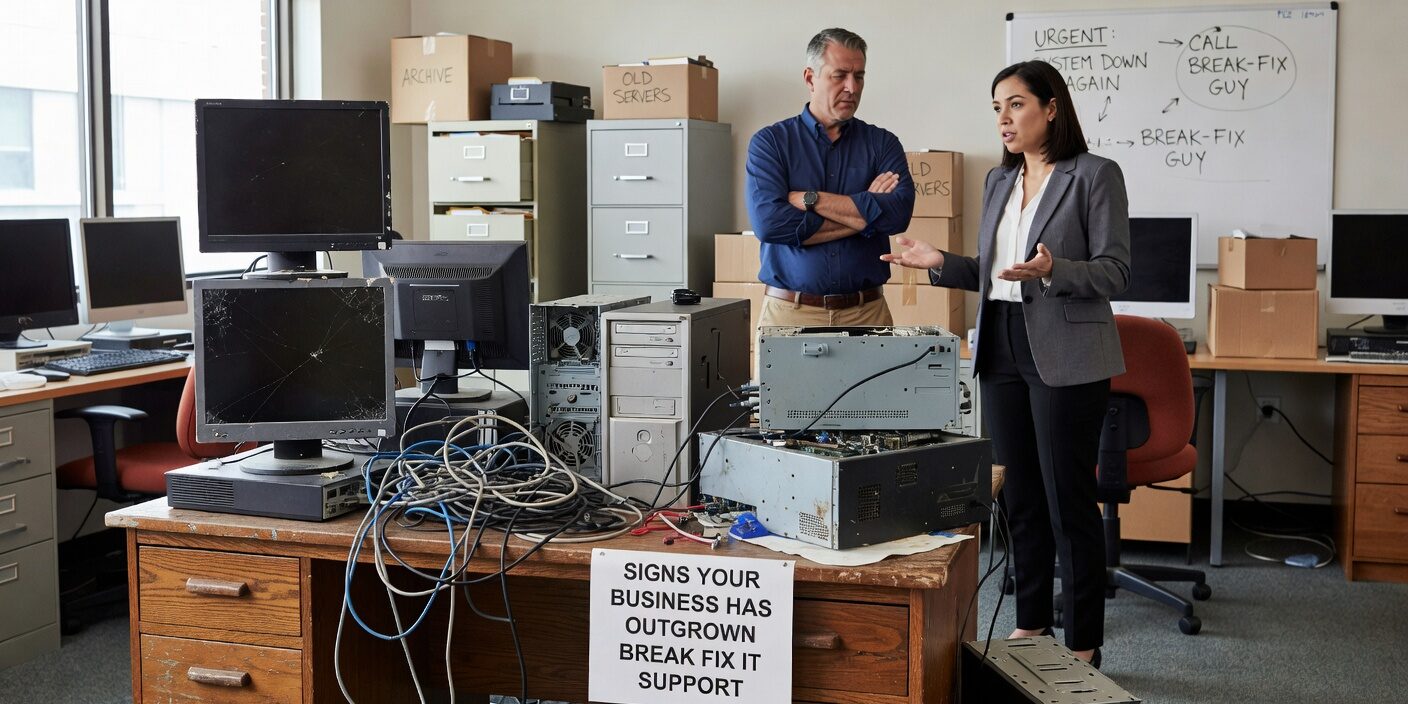
If you’re constantly putting out IT fires and your technology feels more like a problem than a solution, you might be experiencing the clear signs your business has outgrown break fix IT support. Many growing companies start with break-fix IT because it seems cost-effective, but as operations become more complex, this reactive approach often creates more problems than it solves.
Break-fix IT works when you have simple needs and few employees. But as your business grows, the limitations become obvious—and expensive. Here’s how to recognize when it’s time to move from reactive IT fixes to a proactive support model.
IT Problems Keep Recurring Despite “Fixes”
One of the clearest warning signs is when the same issues keep coming back. Your team might joke about rebooting servers every Monday or dealing with the same printer problems week after week.
What this looks like in practice:
- The same application crashes repeatedly, but no one addresses why
- Network outages happen predictably, often at the worst times
- Email or file sharing goes down multiple times per month
- Employees expect IT problems as part of their normal workweek
Break-fix support focuses on getting things working again quickly, not on finding root causes. If you’re paying to fix the same problems repeatedly, you’re subsidizing an inefficient model. Proactive IT support identifies patterns and fixes underlying issues rather than just treating symptoms.
Support Response Times Can’t Keep Up with Your Needs
As your business grows, IT problems have bigger consequences. When your customer database goes down, it affects sales, service, and reputation. But break-fix providers typically work on a first-come, first-served basis without guaranteed response times.
Common response time problems:
- Waiting hours or days for critical system repairs
- No after-hours support when problems happen outside business hours
- One technician handling all requests, creating bottlenecks
- “We’ll get to you when we can” instead of defined service level agreements
Growing businesses need predictable response times and escalation procedures. When a server failure can cost thousands in lost productivity per hour, you can’t afford to wait in line for support.
Your IT Environment Is Too Complex for Ad-Hoc Fixes
Break-fix works well for simple setups—a few computers, basic software, minimal interconnection. But modern business operations create dependencies between systems. When one component fails, it can cascade into multiple problems.
Growing Complexity Indicators:
- Multiple office locations with interconnected systems
- Cloud services integration (Microsoft 365, CRM, accounting software)
- Remote and hybrid workers needing secure access to company resources
- Compliance requirements for data security or industry regulations
- Business-critical applications that other processes depend on
Once you have this level of complexity, random fixes can actually create new problems. Modern business IT requires coordinated management and understanding of how systems work together.
IT Costs Are Unpredictable and Climbing
Break-fix billing can seem attractive because you only pay when something breaks. But this creates several financial problems:
Unpredictable monthly costs make budgeting difficult. One month you might spend $200 on IT; the next month a server failure costs $3,000.
Repeated fixes for the same problems mean you’re paying multiple times without lasting solutions. Cleaning malware repeatedly costs more than implementing proper security controls.
Hidden productivity costs add up quickly. If employees lose 30 minutes per week to IT issues, that’s 26 hours per year per person—significant lost productivity that doesn’t show up on IT invoices.
Emergency rates and rush charges inflate costs when problems happen outside normal hours or need immediate attention.
Security Gaps Are Growing
Cybersecurity threats target businesses of all sizes, but break-fix support rarely includes proactive security management. This creates dangerous gaps as your business grows.
Security Warning Signs:
- No clear picture of which systems are patched and updated
- Antivirus and security software managed separately on each device
- Backup systems that aren’t regularly tested
- No monitoring for suspicious activity or unauthorized access
- Password policies and access controls handled informally
Small security oversights can lead to major incidents. Proactive IT includes continuous security monitoring, regular patching, and structured policies that protect your business as it grows.
You Have No Strategic IT Planning
Break-fix providers focus on immediate problems, not long-term planning. But growing businesses need IT strategies that support their goals.
Signs of missing IT strategy:
- Technology purchases happen reactively when equipment fails
- No standardization across devices, software, or procedures
- Difficulty onboarding new employees quickly
- Missing opportunities to automate workflows or improve efficiency
- No plan for handling growth, new locations, or changing business needs
Without strategic planning, IT becomes a constant source of friction rather than a business enabler. Effective IT support includes planning 12-24 months ahead to ensure technology supports your growth rather than limiting it.
What This Means for Your Business
Recognizing these signs doesn’t mean your break-fix provider did poor work. It means your business has evolved beyond what reactive support can handle effectively. The solution isn’t necessarily hiring full-time IT staff—many growing businesses benefit from outsourced IT support options that provide proactive management without the overhead of internal IT departments.
Key takeaways for business leaders:
- Calculate the true cost of IT problems, including lost productivity and repeated fixes
- Consider whether your current IT support can scale with your growth plans
- Evaluate your cybersecurity posture and compliance requirements
- Think about IT as a business enabler, not just a cost center
The right IT strategy combines proactive monitoring, strategic planning, and responsive support to keep your business running smoothly while positioning you for continued growth.
Ready to move beyond break-fix IT? Contact TECHZN to discuss how proactive IT support can reduce downtime, improve security, and support your business growth in Dallas and Austin. Our team specializes in helping growing businesses transition from reactive IT problems to strategic technology advantages.