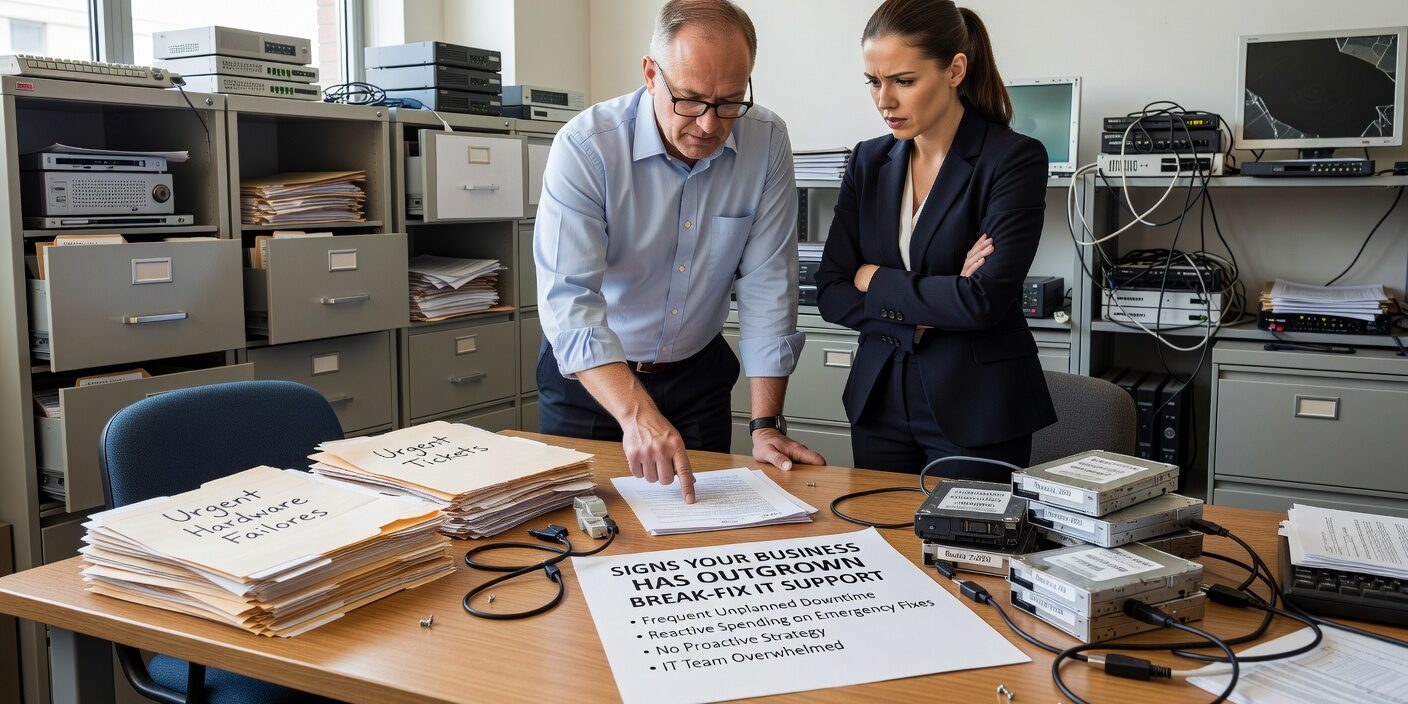
Many growing businesses start with break-fix IT support because it seems cost-effective. You only pay when something breaks, right? But as your company expands and technology becomes more central to daily operations, the signs your business has outgrown break fix IT support become impossible to ignore. What once saved money now costs more in downtime, unpredictable expenses, and missed opportunities.
Recognizing these warning signs early helps you make the transition to proactive IT management before a major crisis forces your hand. Here’s what to watch for as your business grows.
Your IT Problems Happen Every Week, Not Just Occasionally
The clearest indicator that break-fix no longer serves your business is frequency. If your team deals with IT issues multiple times per week, you’ve crossed from occasional hiccups to chronic problems.
Break-fix works when technology failures are rare exceptions. But when staff routinely lose productive time to slow computers, network disconnections, or application crashes, the reactive model becomes a productivity drain.
Watch for these patterns:
- Employees asking for IT help multiple times per week
- The same problems recurring after temporary fixes
- Staff developing “workarounds” instead of getting proper solutions
- IT issues becoming part of your weekly routine rather than surprises
When technology problems feel inevitable rather than exceptional, you need a support model focused on prevention, not reaction.
Downtime Now Threatens Your Business Operations
Early in your company’s growth, a few hours of downtime might be annoying but manageable. As your business scales, however, system outages become genuine threats to customer service, revenue, and reputation.
Small businesses lose an average of $427 per minute during IT downtime. Even “brief” outages add up quickly when you calculate lost productivity, missed deadlines, and frustrated customers.
Signs downtime has become a business risk:
- Customer-facing systems (website, phones, payment processing) go down regularly
- Outages that last hours or days while waiting for someone to respond
- Missing project deadlines due to technical failures
- Leadership recognizing that IT problems “shut down half the business”
When downtime costs exceed the price of proactive management, managed IT becomes the smarter investment.
Your IT Costs Swing Wildly From Month to Month
One of the most telling signs your business has outgrown break fix IT support is unpredictable expenses. Break-fix billing creates feast-or-famine cycles: minimal costs when everything works, followed by massive emergency bills when systems fail.
Common unpredictable cost patterns:
- Months with almost no IT expenses followed by $5,000+ emergency bills
- Server crashes requiring expensive weekend or holiday rates
- Cybersecurity incidents creating sudden consulting and recovery costs
- Hardware failures demanding immediate replacement at premium prices
This unpredictability makes budgeting nearly impossible. CFOs and business owners can’t confidently forecast IT expenses or plan cash flow when every month brings potential surprise costs.
Managed IT services replace this uncertainty with consistent monthly fees that include proactive maintenance, reducing the likelihood of expensive emergencies.
You Can’t Answer Basic Questions About Security and Backup
As businesses grow, they face increased cybersecurity risks and compliance requirements. Break-fix support typically addresses security reactively—after problems occur—leaving dangerous gaps in protection.
Security warning signs:
- No one actively monitors your systems for threats or suspicious activity
- Uncertainty about whether devices receive regular security updates
- Backup systems that aren’t tested or documented
- Inability to answer customer security questionnaires confidently
- No clear plan for recovering from ransomware or data loss
Ask yourself these critical questions:
- If our main server failed today, how long until we’re fully operational?
- Who monitors our systems after hours and on weekends?
- When were our backups last tested and verified as restorable?
- Do we meet industry compliance requirements our customers expect?
If you can’t answer these questions confidently, your security and recovery capabilities haven’t kept pace with your business growth.
Response Times Don’t Match Your Business Needs
Break-fix providers typically work during business hours and respond when their schedule permits. This approach becomes problematic when your business operates beyond traditional hours or when rapid resolution is critical.
Response time problems:
- Waiting hours or days for technicians to address urgent issues
- No after-hours support when problems occur evenings or weekends
- Inconsistent service quality depending on which technician is available
- No service level agreements defining expected response times
- Different solutions from different technicians for the same problems
Growing businesses need structured support processes with defined response times, proper escalation procedures, and consistent service quality regardless of when issues occur.
Technology Has Become a Growth Bottleneck
Perhaps the most strategic sign you’ve outgrown break-fix support is when IT limitations start constraining business growth. Your technology infrastructure should enable expansion, not prevent it.
Growth bottleneck indicators:
- Delaying new hires because you’re unsure how to support additional users
- Avoiding new software or cloud services due to integration concerns
- Postponing office expansions or remote work because of technical complexity
- Leadership spending excessive time managing IT issues instead of business strategy
Your IT infrastructure often becomes “hacked together” during rapid growth—new devices and services added ad-hoc without proper planning or integration. This creates fragile systems where one failure can cascade into multiple problems.
Strategic IT management includes planning technology roadmaps, standardizing systems, and ensuring infrastructure scales smoothly with business growth.
What This Means for Your Business
Recognizing these signs early allows you to transition from reactive break-fix to proactive management before a crisis forces the decision. Most businesses find the switch worthwhile when they have more than 10 employees heavily dependent on technology and experience IT issues weekly rather than monthly.
The transition to managed IT support for growing businesses typically includes 24/7 monitoring, defined response times, strategic planning, and predictable monthly costs. This shift from reactive firefighting to proactive management reduces downtime, improves security, and enables confident business growth.
Ready to explore proactive IT management for your growing business? TECHZN provides comprehensive managed IT services designed specifically for small and medium businesses in Dallas and Austin. Contact us today to discuss how proactive IT support can reduce your downtime, improve security, and support your growth plans with predictable monthly costs instead of surprise emergency bills.