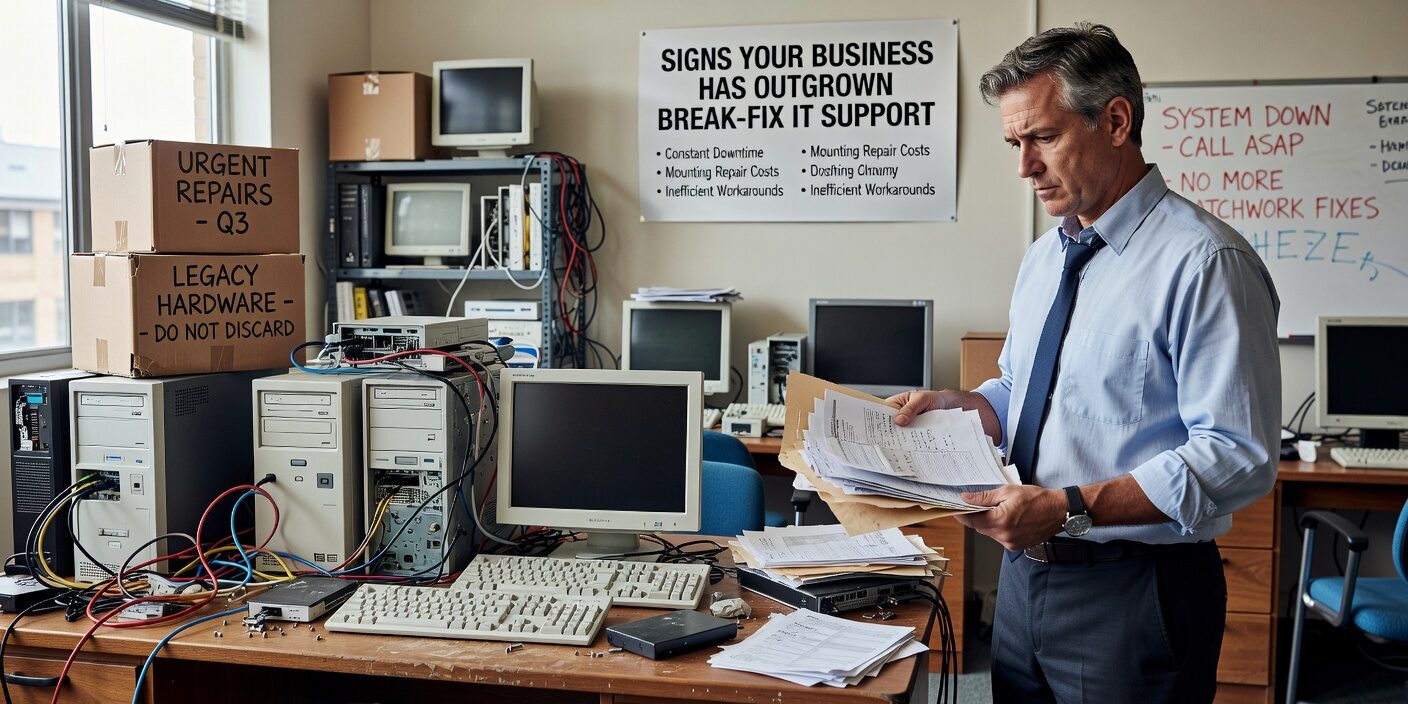
Many growing businesses start with break-fix IT support because it seems cost-effective and straightforward. But as your company expands, this reactive approach often becomes a liability rather than a solution. Recognizing the signs your business has outgrown break fix IT support helps you avoid costly downtime, security gaps, and operational disruptions that can derail growth.
Break-fix works well for very small businesses with simple technology needs. However, when IT problems start affecting daily operations, budgeting becomes impossible due to surprise repair bills, or security risks multiply faster than you can address them, it’s time to consider a more proactive approach.
Your IT Costs Have Become Unpredictable
One of the clearest warning signs is financial uncertainty. With break-fix support, costs spike unexpectedly when systems fail, hardware breaks down, or security incidents occur. Emergency after-hours calls, rush hardware replacements, and crisis recovery work can create budget chaos.
When you find yourself regularly surprised by IT invoices, or when you can’t confidently budget for technology expenses beyond basic monthly services, you’ve likely outgrown the break-fix model. Predictable monthly IT costs become essential for growing businesses that need reliable financial planning.
Consider these red flags:
- Emergency repair bills that exceed your monthly technology budget
- Surprise costs for after-hours support or weekend fixes
- Invoices for security cleanup or ransomware recovery
- Rush charges for replacement hardware when systems fail
Downtime Is Becoming Normal Rather Than Exceptional
Frequent downtime is perhaps the most damaging sign that break-fix support is no longer adequate. When your team expects IT problems rather than being surprised by them, you’ve crossed a critical threshold.
Productivity suffers when employees regularly can’t access:
- Email and communication tools
- Shared files and databases
- Cloud applications and software
- Internet connectivity for research and client work
The business impact extends beyond lost work hours. Customer service suffers when staff can’t access client information during calls. Sales opportunities disappear when team members can’t respond quickly to prospects. Project deadlines get missed when critical systems go down during busy periods.
If outages happen weekly or if a single server failure can stop large portions of your business from functioning, you need a more reliable approach than waiting for problems to occur and then fixing them.
Security Has Become Reactive and Insufficient
As businesses grow, they become more attractive targets for cybercriminals. Break-fix support typically addresses security after problems occur rather than preventing them. This reactive approach creates dangerous gaps in protection.
Warning signs include:
- No ongoing monitoring for threats or unusual network activity
- Inconsistent software updates and security patches
- Weak or nonexistent backup and recovery procedures
- Little to no protection against phishing, ransomware, or data breaches
- Inability to answer basic security questions about your current protection level
Growing businesses often face compliance requirements that break-fix support can’t adequately address. Whether it’s industry regulations, client security questionnaires, or cyber insurance requirements, you need proactive security measures and documented procedures that reactive support rarely provides.
The Same Problems Keep Recurring
When you notice the same IT issues happening repeatedly, it signals that problems are being patched rather than properly resolved. Break-fix support often focuses on getting systems running quickly rather than addressing root causes.
Common recurring problems include:
- Network slowdowns that temporarily improve but return within weeks
- Email issues that get “fixed” but happen again
- Software crashes that require frequent restarts or reinstalls
- Hardware that repeatedly malfunctions despite repairs
This pattern wastes money on repeated service calls and creates ongoing frustration for employees who can’t rely on their technology to work consistently.
Response Times No Longer Match Business Needs
As your business becomes more dependent on technology, response time requirements change dramatically. What seemed like acceptable support turnaround for a smaller operation becomes inadequate when more employees depend on systems working continuously.
If your business can’t afford to wait hours or days for IT support, or if delayed responses regularly disrupt client service or project deadlines, you need faster, more responsive support than typical break-fix arrangements provide.
Your Technology Environment Has Become Complex
Break-fix support works best for simple, straightforward technology setups. But growing businesses typically add:
- More employees who need reliable access to shared systems
- Additional devices, servers, and networking equipment
- Cloud services that need integration and management
- Remote work capabilities that require secure connections
- Multiple locations that need coordinated IT support
This complexity makes reactive support increasingly inadequate. Proactive management becomes essential when technology interdependencies mean that one failure can cascade into multiple problems.
You Need Strategic IT Planning, Not Just Repairs
Perhaps the most important sign that you’ve outgrown break-fix support is when your business needs technology strategy rather than just emergency repairs. Growing companies require:
- Capacity planning to ensure systems can handle increased usage
- Security roadmaps that anticipate and prevent threats
- Integration planning for new software and services
- Scalability assessments to support business growth
- Backup and disaster recovery planning that’s tested and reliable
Break-fix support focuses on immediate problems, not long-term technology planning. When your business success depends on reliable, secure, and scalable technology infrastructure, you need managed IT support for growing businesses that includes strategic planning and proactive management.
What This Means for Your Business
Recognizing these warning signs early helps you transition to more appropriate IT support before problems become crises. The key insight is that proactive management costs less than reactive repairs when you factor in downtime, lost productivity, security risks, and the hidden costs of unreliable technology.
Modern businesses need IT support that prevents problems rather than just fixing them after they occur. This means regular maintenance, proactive monitoring, strategic planning, and predictable costs that support business growth rather than hindering it.
The right IT support strategy should reduce downtime, improve security, enable growth, and provide the reliability your team needs to focus on core business activities rather than technology problems.
Ready to move beyond break-fix IT support? Contact TECHZN today to learn how proactive IT management can improve reliability, reduce costs, and support your business growth with predictable, comprehensive technology support.