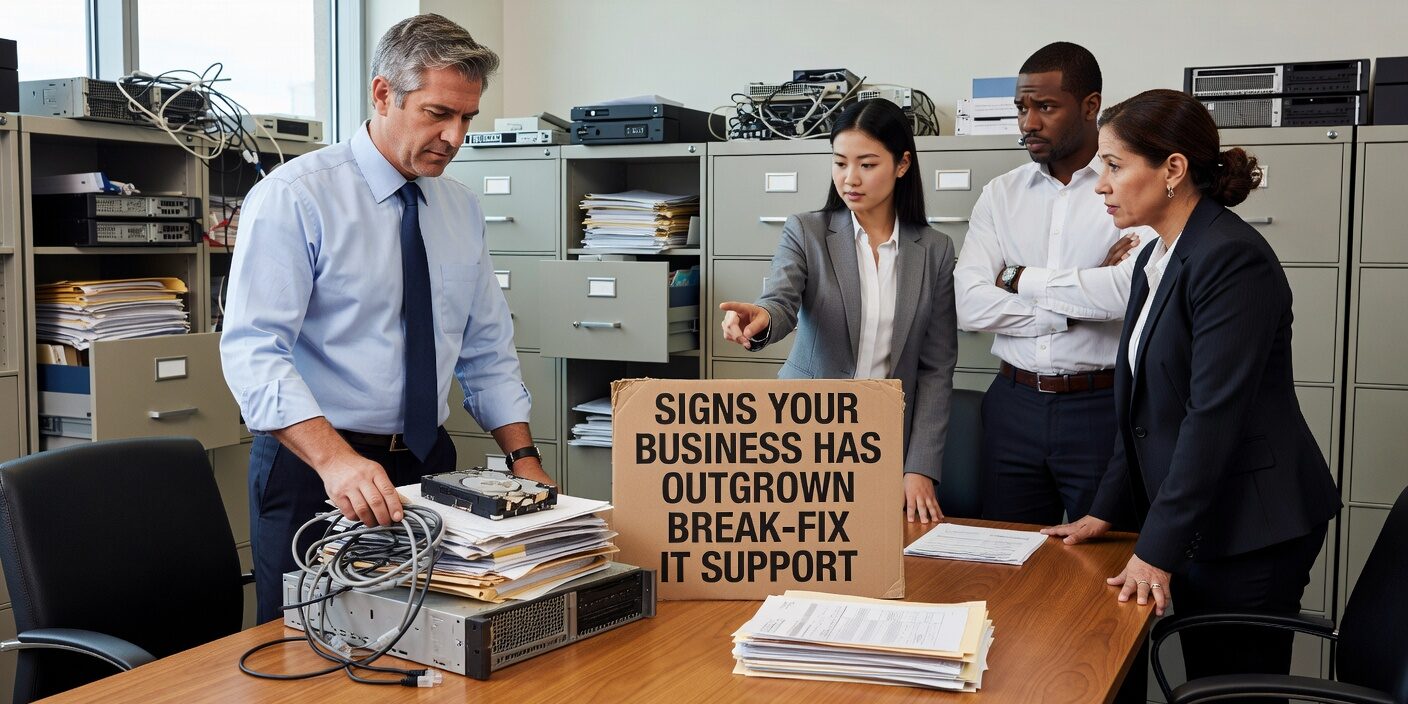
Many growing businesses start with break-fix IT support because it seems cost-effective and straightforward. You call when something breaks, pay for the fix, and move on. But as your business expands and becomes more dependent on technology, the signs your business has outgrown break fix IT support become impossible to ignore. What once saved money now costs productivity, creates security risks, and makes budgeting nearly impossible.
When IT Problems Become Business Problems
The clearest indicator that break-fix support is no longer working is when technology issues start affecting your bottom line. If your team loses productive hours waiting for fixes, customers experience service delays due to system failures, or you’re postponing important projects because of recurring IT problems, you’ve moved beyond simple technical hiccups.
Break-fix support works best when:
- IT issues are rare and isolated
- Downtime doesn’t significantly impact revenue
- Your technology needs are simple and predictable
- Staff can work effectively without constant system access
When these conditions no longer apply, reactive IT support becomes a business liability rather than a cost-saving measure.
Unpredictable IT Costs Are Hurting Your Budget
One of the most frustrating aspects of outgrowing break-fix support is the unpredictable expense cycle. Emergency repairs, rush orders for replacement hardware, and after-hours service calls create budget chaos. You might spend very little on IT for months, then face a massive bill when multiple systems fail simultaneously.
This unpredictability makes it nearly impossible to:
- Plan accurate IT budgets
- Allocate funds for strategic technology investments
- Understand your true cost per employee for technology support
- Compare IT expenses to industry benchmarks
Warning signs include:
- Surprise IT bills that exceed $2,000 in a single month
- Having to delay other business investments due to unexpected IT costs
- Spending more on emergency fixes than planned technology upgrades
- Unable to accurately estimate monthly IT expenses
Frequent Downtime Is Slowing Your Team
When your business depends on technology for daily operations, every minute of downtime translates to lost productivity. Break-fix support inherently means waiting until something breaks completely before addressing it. This reactive approach creates longer outages and more frequent disruptions.
Consider these scenarios:
- Your email server crashes during a busy sales period
- The accounting system fails right before month-end closing
- Internet connectivity issues prevent remote workers from accessing files
- The phone system goes down during peak customer service hours
If these situations sound familiar and happen more than once per quarter, your business has likely outgrown reactive IT support. Proactive monitoring and maintenance can prevent many of these issues before they impact your operations.
Security Risks Are Increasing
Break-fix IT support typically addresses security only after a problem occurs. This approach worked when cyber threats were less sophisticated and data breaches were rare. Today’s threat landscape requires continuous monitoring and proactive defense.
Your security needs have outgrown break-fix support if:
- You store sensitive customer data or payment information
- Employees access company systems remotely
- Your industry has specific compliance requirements
- You’ve experienced suspicious email activity or attempted breaches
- Staff regularly use cloud applications for business operations
The Cost of Reactive Security
Waiting to address security until after an incident can be devastating. The average small business data breach costs over $100,000 when you factor in recovery time, lost business, legal fees, and reputation damage. Preventive security measures cost significantly less than post-incident recovery.
You Need Strategic IT Planning
As your business grows, technology decisions become increasingly complex and strategic. Break-fix providers typically focus on immediate problems rather than long-term planning. You need IT guidance that aligns with your business goals and growth trajectory.
Strategic IT planning includes:
- Creating a technology roadmap for the next 12-24 months
- Evaluating new software before implementation
- Planning for staff growth and technology scaling
- Coordinating IT decisions with facility moves or expansions
- Ensuring technology investments support business objectives
If you’re making technology decisions without professional guidance or implementing new systems without proper planning, you’re likely missing opportunities to improve efficiency and avoid costly mistakes.
Response Times Are Too Slow for Your Pace
Break-fix providers often work on a first-come, first-served basis or prioritize clients based on service contracts. As your business becomes more technology-dependent, waiting hours or days for IT support becomes unacceptable.
Your response time needs have evolved if:
- Staff productivity drops significantly during IT outages
- You have customer-facing systems that require immediate attention
- Remote workers depend on constant system access
- Time-sensitive processes (payroll, billing, reporting) cannot be delayed
Many growing businesses need same-day response times for critical issues and dedicated support channels that prioritize their requests.
Making the Transition Decision
Recognizing these signs doesn’t mean you need to switch immediately, but it does mean you should evaluate your options. Managed IT support for growing businesses offers predictable costs, proactive maintenance, strategic planning, and faster response times.
Questions to ask yourself:
- How much productive time does your team lose to IT issues each month?
- What would a major system failure cost your business in lost revenue?
- Are you confident in your current cybersecurity posture?
- Do you have a clear technology plan for the next year?
If these questions reveal gaps in your current IT support model, it may be time to explore more comprehensive options.
What This Means for Your Business
Outgrowing break-fix IT support is a positive sign—it means your business is expanding and becoming more sophisticated. However, continuing with reactive IT support when you need proactive management can limit growth and create unnecessary risks. The key is recognizing when your technology needs have evolved beyond simple break-fix solutions and taking action before IT problems start affecting your business operations.
The right IT support strategy should reduce downtime, improve security, provide predictable costs, and align technology decisions with your business goals. By addressing these needs proactively, you can focus on growing your business instead of constantly managing IT emergencies.
Ready to evaluate your IT support options? Contact TECHZN today to discuss how proactive IT management can support your business growth and reduce technology-related disruptions.