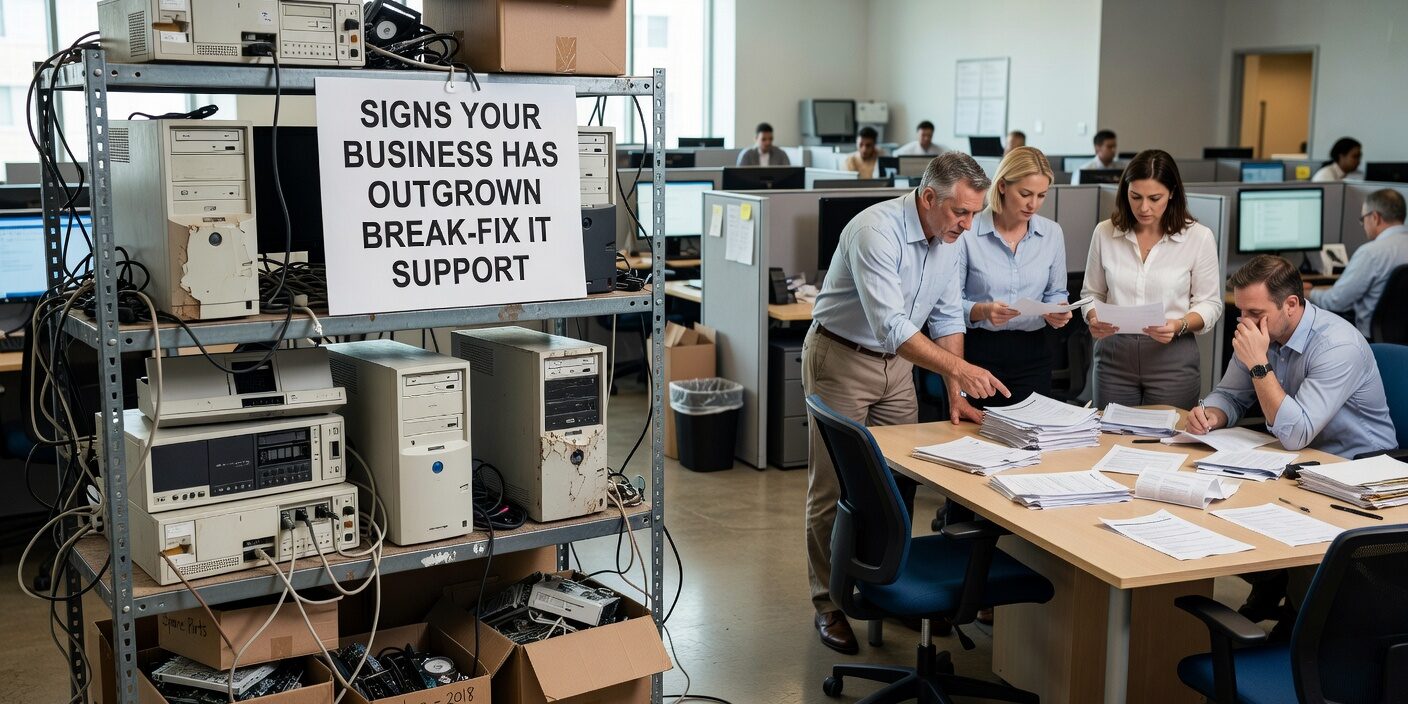
Every growing business reaches a point where fixing technology problems as they happen stops being cost-effective. Signs your business has outgrown break fix IT support often appear gradually, but they create real operational challenges that affect productivity, security, and growth.
Recognizing these indicators helps business leaders understand when it’s time to consider a more proactive approach to technology management.
The Same Problems Keep Coming Back
When your team sees the same IT issues repeatedly, it’s a clear signal that underlying problems aren’t being addressed. Break-fix support focuses on symptoms rather than root causes.
Common recurring issues include: • Slow computers that get “fixed” but slow down again within weeks • Network connectivity problems that temporarily resolve but return • Email issues that seem to fix themselves but create ongoing frustration • Printers that work after being reset but continue causing problems • Software crashes that restart fine but happen again days later
These patterns indicate your technology environment needs systematic analysis and preventive maintenance rather than quick patches. When employees start planning their day around “IT being flaky,” you’ve moved beyond what reactive support can handle effectively.
IT Downtime Has Real Business Impact
Small amounts of downtime might seem manageable, but as your business grows, even brief outages create measurable costs. Signs that downtime has become a business problem include:
Revenue and customer impact: • Missing orders when systems go down • Unable to process payments or send invoices • Customer service delays during phone system issues • Project deadlines missed due to file access problems
Lost productivity across teams: • Employees sitting idle waiting for systems to work • Key staff pulled away from their main responsibilities to fix IT issues • Work-arounds that waste time and create inefficiencies • Remote workers unable to access necessary files or applications
When downtime lasts hours instead of minutes, or happens frequently enough that staff expect it, your business has outgrown reactive IT support. Professional IT management with monitoring and rapid response becomes essential for maintaining operations.
Security Feels Like an Afterthought
Growing businesses become attractive targets for cyber threats, but break-fix support typically handles security reactively. Warning signs include:
Limited security measures: • Basic antivirus software as the primary protection • Infrequent or manual software updates • No monitoring for suspicious activity • Password policies that aren’t enforced consistently
Reactive approach to threats: • Security discussions only happen after incidents • No regular vulnerability assessments • Unclear backup and recovery procedures • Limited employee training on security best practices
If you’re unsure about your security posture or only address cybersecurity after problems occur, your business needs proactive security management. This includes regular monitoring, patch management, threat detection, and security awareness training.
IT Costs Are Unpredictable and Disruptive
Break-fix billing creates feast-or-famine scenarios that make budgeting difficult. Signs your IT costs have become problematic:
Financial unpredictability: • Months with no IT expenses followed by large emergency bills • Major repair costs hitting during busy seasons or cash flow crunches • Difficulty planning technology budgets or forecasting expenses • Emergency replacement costs for failed equipment
Hidden productivity costs: • Time spent by managers dealing with IT issues • Lost billable hours during system downtime • Delayed projects due to technology problems • Reduced efficiency from outdated or unreliable systems
Businesses that need predictable monthly IT expenses and clear visibility into technology costs typically benefit from managed IT support with fixed pricing and planned equipment refresh cycles.
Growth Is Being Limited by Technology
Perhaps the clearest sign you’ve outgrown break-fix support is when IT becomes a bottleneck for business growth. Common scenarios include:
Scaling challenges: • Adding new employees takes days due to manual setup processes • Opening new locations requires significant IT planning and risk • Integrating new software or tools feels risky and complicated • Remote work arrangements create ongoing connectivity and access issues
Strategic limitations: • Business decisions influenced by what IT can currently support • New initiatives delayed because technology can’t keep up • Competitive disadvantages due to outdated systems or processes • Difficulty meeting customer requirements for security or compliance
When technology holds back business opportunities rather than enabling them, it’s time to consider IT support strategy for small businesses that includes planning, standardization, and growth-focused guidance.
No Strategic IT Planning or Ownership
Break-fix support handles immediate problems but doesn’t provide strategic guidance. Signs you need IT leadership include:
Reactive decision-making: • Hardware only replaced after it fails completely • Software updates avoided until absolutely necessary • No documented technology roadmap or refresh schedule • Cloud migrations happening piece by piece without overall strategy
Lack of accountability: • No clear owner for IT decisions and planning • Multiple vendors pointing fingers when complex issues arise • Inconsistent configurations across different systems • No regular review of technology performance or costs
Growing businesses need strategic IT guidance that aligns technology decisions with business goals. This includes lifecycle planning, vendor management, and technology roadmaps that support long-term growth.
What This Means for Your Business
Recognizing these signs early helps prevent IT issues from becoming major business obstacles. The transition from break-fix to managed IT support typically makes sense when multiple indicators appear:
• Recurring problems affect daily operations • Downtime creates measurable business impact • Security and compliance require proactive attention • Growth plans depend on reliable technology • Predictable IT costs support better business planning
The right IT support strategy provides proactive monitoring, strategic planning, security management, and predictable costs that support business growth rather than limiting it.
Ready to explore how proactive IT management can support your growing business? Contact TECHZN to discuss managed IT solutions designed specifically for businesses in Dallas and Austin. Our team specializes in helping companies transition from reactive support to strategic technology partnerships that enable growth and protect operations.