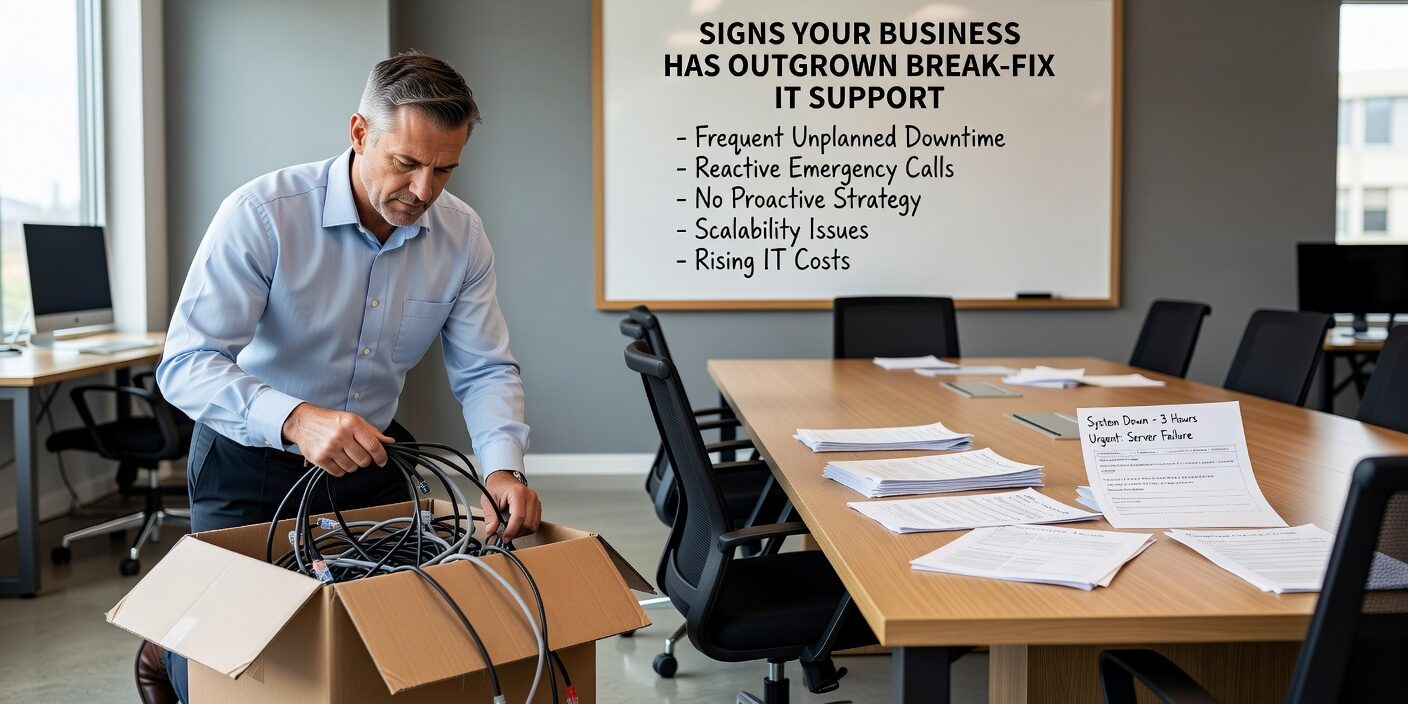
Many growing businesses start with informal IT help—a tech-savvy employee, a friend’s recommendation, or that reliable contractor who fixes problems when they pop up. But as your operations become more dependent on technology, the signs your business has outgrown break fix IT support become impossible to ignore. The shift from occasional tech hiccups to recurring business risks signals it’s time for a more strategic approach.
The Same Problems Keep Coming Back
When you find yourself calling for help with the same issues month after month, you’re dealing with symptoms rather than root causes. Break-fix support typically addresses immediate problems without examining underlying infrastructure weaknesses. Your email server crashes repeatedly, the network slows down every afternoon, or certain applications freeze regularly.
This pattern indicates your IT environment needs systematic evaluation and preventive maintenance. Professional IT support focuses on identifying why problems occur and implementing solutions that prevent recurrence. Instead of patching the same leak repeatedly, they fix the pipe.
Downtime Is Becoming Your New Normal
Frequent system outages that disrupt daily operations represent one of the clearest warning signs. When employees regularly lose productive time waiting for systems to come back online, the cost of break-fix support extends far beyond the repair bill.
Calculate the real impact: If five employees making $25 per hour lose two hours of productivity during a system outage, that single incident costs $250 in lost wages—before considering missed deadlines, frustrated customers, or delayed projects.
Businesses that depend on technology for daily operations cannot afford to treat downtime as normal. Professional IT support emphasizes uptime through proactive monitoring, regular maintenance, and redundancy planning.
IT Costs Have Become Unpredictable
Emergency repairs, after-hours service calls, and rushed equipment purchases make it impossible to budget accurately for technology expenses. Break-fix support often costs more over time because every issue becomes an urgent, premium-priced problem.
Professional IT support provides predictable monthly costs that include:
- Regular maintenance and updates
- Proactive monitoring and issue prevention
- Help desk support during business hours
- Strategic planning for equipment refresh cycles
This predictability allows better financial planning and often reduces total IT spending by preventing expensive emergency situations.
Security Feels Like an Afterthought
Reactive Security Creates Vulnerabilities
Break-fix support typically addresses security issues only after they’re discovered—or worse, after they’ve been exploited. Your business needs proactive cybersecurity measures including:
- Regular software updates and security patches
- Employee training on recognizing threats
- Backup verification and disaster recovery planning
- Multi-factor authentication and access controls
Compliance Requirements Add Complexity
Many industries require specific data protection measures, audit trails, and documentation. Ad hoc IT help rarely includes compliance expertise, leaving businesses vulnerable to violations that could result in fines or lost certifications.
Your Growth Is Outpacing Your IT Infrastructure
Success brings new challenges. Adding employees means more devices, user accounts, and network demands. Remote work requires secure access solutions. Multiple locations need reliable connectivity and standardized systems.
Break-fix support struggles with growth scenarios because each expansion becomes a series of individual problems rather than part of a coordinated technology strategy. Professional IT support includes growth planning that scales infrastructure alongside business needs.
Signs Growth Has Exceeded Current Support:
- New employees wait days or weeks for proper system access
- Adding devices creates network performance issues
- File sharing and collaboration tools feel fragmented
- Remote access solutions seem insecure or unreliable
- Different locations operate with incompatible systems
Response Times Don’t Match Business Needs
When technology problems bring operations to a halt, response time becomes critical. Break-fix providers often prioritize based on their schedule rather than your business urgency. You might wait hours or days for assistance with problems that stop revenue, prevent customer service, or delay payroll.
Professional IT support includes defined response times that match business priorities. Critical systems receive immediate attention, while less urgent issues follow established timeframes that keep operations running smoothly.
Strategic IT Planning Is Nonexistent
Effective technology management requires forward thinking. When will current equipment need replacement? How should cloud services integrate with existing systems? What backup and recovery capabilities protect against data loss?
Break-fix support focuses on immediate problems rather than long-term strategy. This reactive approach leads to:
- Expensive emergency equipment purchases
- Incompatible systems that don’t work together
- Missed opportunities for efficiency improvements
- Technology decisions made under pressure
Professional IT support includes regular planning sessions that align technology investments with business goals, preventing costly reactive decisions.
What This Means for Your Business
Recognizing these warning signs early allows you to transition from reactive break-fix support to proactive IT management before the next crisis hits. The right IT support strategy reduces downtime, improves security, and provides predictable costs that support business growth rather than limiting it.
Professional IT support transforms technology from a source of stress into a competitive advantage. Instead of wondering when the next problem will occur, you can focus on using technology to serve customers better, improve efficiency, and grow your business.
Ready to move beyond break-fix IT support? Contact TECHZN to discuss how managed IT support for growing businesses can provide the reliability, security, and strategic planning your operations deserve.