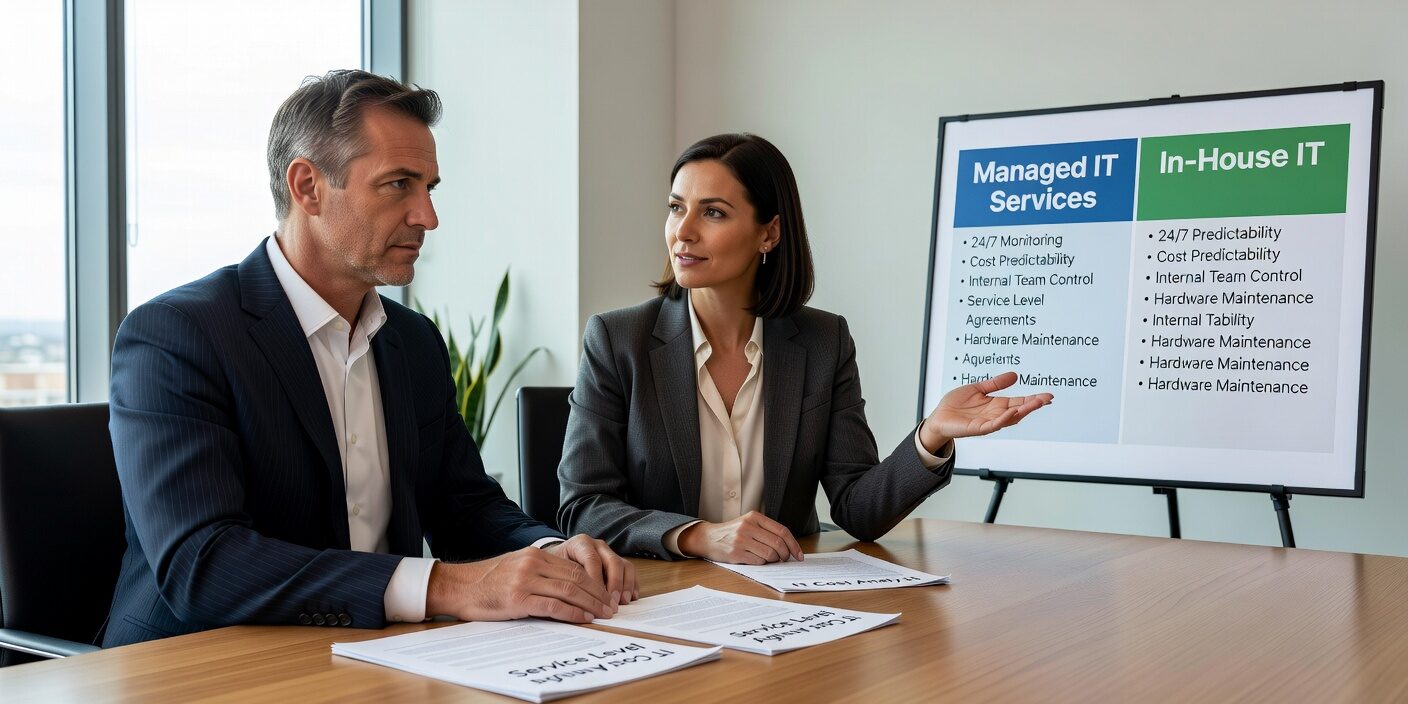
Deciding between managed IT services vs in-house IT is one of the most important technology decisions for growing businesses. This choice affects your budget, security, operational efficiency, and ability to scale. Understanding the real costs and benefits of each approach helps you make the right decision for your business situation.
Cost Comparison: Beyond the Monthly Bill
The cost difference between managed IT and in-house teams goes far beyond comparing a monthly service fee to an employee salary.
True costs of in-house IT include:
- Base salary plus benefits (typically 20-30% additional)
- Payroll taxes and workers’ compensation
- Training and certification costs
- IT tools, software licenses, and monitoring systems
- Backup coverage for sick days, vacations, and turnover
- Recruitment and onboarding expenses
Managed IT services offer predictable pricing that includes:
- All monitoring and maintenance tools
- Team coverage with multiple skill sets
- 24/7 support and emergency response
- Security tools and compliance assistance
- Regular updates and patches
For most small and mid-size businesses, managed services reduce total IT costs by 20-40% while providing broader expertise and better coverage.
Expertise and Coverage: Depth vs Breadth
In-house IT strengths:
- Deep knowledge of your specific business processes
- Immediate on-site availability for hands-on issues
- Direct alignment with company priorities and culture
- Full control over IT decisions and timing
Managed IT advantages:
- Access to specialists in security, cloud, networking, and compliance
- Team redundancy prevents single points of failure
- Exposure to best practices from multiple businesses
- Advanced monitoring tools that catch problems early
The reality is that most small businesses cannot afford the full range of IT expertise they need internally. A single IT person may handle everything from password resets to cybersecurity planning, often without specialized training in critical areas like disaster recovery or regulatory compliance.
Security and Compliance Considerations
Cybersecurity represents one of the biggest differences between the two approaches. In-house IT teams at smaller companies often lack dedicated security training and may struggle to stay current with evolving threats. Managed providers typically offer enterprise-grade security tools, regular training, and dedicated security staff that smaller businesses couldn’t justify hiring.
For businesses in regulated industries, managed providers often bring compliance expertise and documentation that would be expensive to develop internally.
Operational Efficiency and Response Time
Response time differences:
- In-house: Immediate for physical issues, but limited by individual availability
- Managed: 24/7 remote monitoring, but may require scheduled on-site visits
Coverage and availability:
- In-house: Vulnerable to sick days, vacations, and employee turnover
- Managed: Team coverage ensures consistent support
Scalability factors:
- In-house: Requires hiring and training new staff as you grow
- Managed: Services can expand or contract based on business needs
Many businesses find that managed providers actually deliver faster resolution times for common issues because they have specialized tools and experience with similar problems across multiple clients.
When In-House IT Makes Sense
Certain business situations favor keeping IT support internal:
High on-site requirements: Manufacturing, healthcare, or retail environments where someone needs to be physically present throughout business hours.
Highly specialized systems: Custom applications or industry-specific software that requires constant internal expertise.
Regulatory or security constraints: Some compliance requirements mandate internal IT control, though this is less common than many businesses assume.
Sufficient budget and scale: Larger companies that can afford multiple IT specialists and redundant coverage.
Strong internal IT leadership: Businesses with experienced IT managers who can effectively hire, train, and retain technical staff.
When Managed Services Are the Better Choice
Most growing businesses benefit more from managed IT services when they need:
Predictable IT budgets without surprise expenses from equipment failures or security incidents
Broader expertise than a small internal team can provide, especially in security and compliance
24/7 monitoring and support to prevent problems and minimize downtime
Faster scaling as the business grows or technology needs change
Reduced management overhead to focus leadership attention on core business activities
Better disaster recovery and business continuity planning than internal teams typically provide
Hybrid Approach: Co-Managed IT
Some businesses choose a co-managed model that combines internal IT staff with external managed services. This approach works well when you have some internal IT expertise but need to supplement specific areas like:
- After-hours monitoring and support
- Specialized security services
- Cloud migration and management
- Compliance assistance
- Backup IT coverage during vacations or peak periods
The co-managed approach allows you to maintain internal control while filling expertise gaps and ensuring better coverage.
Making Your Decision: Key Questions to Ask
Before choosing between managed IT services vs in-house IT, evaluate your specific situation:
Budget and predictability: Do you prefer fixed monthly costs or variable internal expenses?
Current IT challenges: Are you struggling with security, downtime, or response times?
Growth plans: Will your IT needs change significantly over the next 2-3 years?
Risk tolerance: How much can your business afford IT-related downtime or security incidents?
Management bandwidth: Do you want to manage IT staff and strategy internally?
Compliance requirements: Do you have regulatory or security standards that require specific expertise?
What This Means for Your Business
The choice between managed IT services vs in-house IT ultimately depends on your business size, budget, technical requirements, and growth plans. Most small and mid-size businesses find that managed services provide better value, broader expertise, and more predictable costs than building internal IT teams.
The key is ensuring your chosen approach aligns with your operational needs and provides the security, reliability, and support your business requires to grow efficiently.
If you’re evaluating your current IT approach or considering a change, start by documenting your real IT costs, response time requirements, and business continuity needs. This assessment will guide you toward the solution that best supports your business goals while protecting your operations and data.