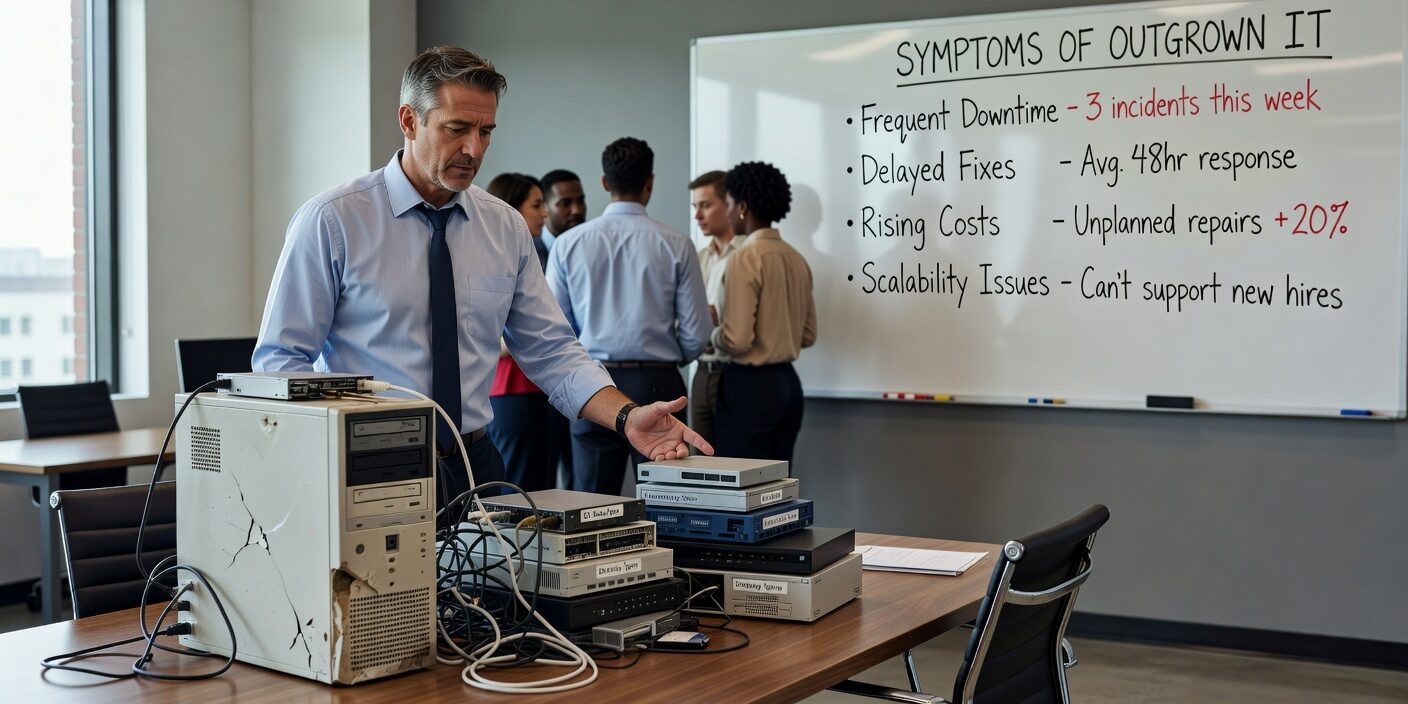
Many growing businesses start with simple IT support—calling someone when something breaks, relying on a single tech-savvy employee, or using break-fix services for occasional repairs. This approach works well for very small teams, but there comes a point when signs your business has outgrown break fix IT support become impossible to ignore.
Recognizing these warning signs early helps you avoid costly downtime, security risks, and the frustration of watching technology hold back your growth instead of supporting it.
Your Team Is Losing Too Much Time to IT Issues
When IT problems start affecting daily productivity, it’s a clear signal that reactive support isn’t enough anymore. Break-fix works when technology issues are rare exceptions, but it fails when they become routine interruptions.
Watch for these productivity warning signs:
• Employees regularly lose hours waiting for IT fixes • The same problems keep happening week after week • Staff members spend significant time troubleshooting instead of working • Slow systems or network issues affect multiple people simultaneously • Email, file access, or application outages happen monthly or more
When your team grows beyond 10-15 people, these interruptions multiply quickly. What might cost one person an hour can now affect your entire workforce, turning small IT problems into expensive business disruptions.
Technology Complexity Has Increased Beyond Basic Support
Break-fix IT support works best in simple environments with minimal technology dependencies. As your business grows, technology complexity increases exponentially, making reactive support inadequate.
Signs your IT environment is too complex for break-fix:
• You’ve added servers, cloud services, or multiple software applications • Remote or hybrid employees need secure access to company systems • Multiple office locations require coordinated IT support • Your network includes more than basic computers and printers • Integration between different systems affects daily operations • Compliance requirements demand ongoing security management
Complex environments need proactive monitoring, regular maintenance, and strategic planning—not just emergency repairs. When one system failure can cascade into multiple problems, you need support that prevents issues rather than just fixing them.
Security and Compliance Requirements Are Growing
Modern cybersecurity threats require ongoing attention, not occasional fixes. If your business handles customer data, financial information, or operates in a regulated industry, break-fix support often falls short of security requirements.
Essential Security Management Tasks
Effective cybersecurity requires consistent, ongoing activities that break-fix support typically doesn’t include:
• Regular security updates and patches across all systems • Continuous monitoring for threats and unusual activity • Employee security training and phishing awareness programs • Tested backup and recovery procedures for ransomware protection • Access control management as employees join and leave • Compliance documentation for industry regulations
If you’re unsure whether your current security measures meet modern standards, that uncertainty itself indicates you need more comprehensive IT support.
IT Costs Have Become Unpredictable
Break-fix billing creates unpredictable expenses that become harder to manage as your business grows. Emergency repairs, rush service calls, and reactive problem-solving often cost significantly more than preventive maintenance.
Financial warning signs include:
• Monthly IT bills that vary dramatically • Frequent emergency service charges • Surprise costs when critical systems fail • Difficulty budgeting for technology expenses • Lost revenue from extended downtime
As your business grows, these cost spikes become more damaging. A server failure that might have affected five employees now impacts twenty, multiplying the business cost of every IT problem.
Response Times Don’t Match Business Needs
When technology supports critical business operations, you need guaranteed response times and priority support for urgent issues. Break-fix providers often work on a first-come, first-served basis without considering business impact.
Consider whether your current support provides:
• Clear response time guarantees for different types of issues • Priority handling for problems that affect multiple employees • After-hours support when your team works beyond normal business hours • Escalation procedures for complex or recurring problems • Regular communication during extended outages
If you’re frequently wondering when help will arrive during IT emergencies, your support model no longer matches your business needs.
Strategic IT Planning Is Missing
Break-fix support focuses on immediate problems, not long-term strategy. Growing businesses need IT guidance that supports future plans, not just current repairs.
Questions That Indicate Missing IT Strategy
• Who helps you plan technology upgrades and replacements? • How do you evaluate new software or cloud services? • What’s your strategy for supporting remote employees? • How does your technology support business growth plans? • Who advises you on cybersecurity improvements? • How do you prepare for compliance audits or customer security requirements?
If you don’t have clear answers to these questions, you’re likely missing the strategic IT guidance that growing businesses need for operational efficiency.
What This Means for Your Business
Recognizing these signs early allows you to transition to more comprehensive IT support before problems become crises. The goal isn’t to eliminate all technology issues—that’s impossible—but to ensure your IT strategy supports business growth rather than limiting it.
Key benefits of moving beyond break-fix support:
• Reduced downtime through proactive monitoring and maintenance • Predictable costs with structured service agreements • Better security through ongoing threat management • Faster response times with priority support for critical issues • Strategic guidance for technology planning and business growth
The transition doesn’t have to be immediate or disruptive. Many businesses start with co-managed IT services, where external experts supplement existing support, or implement managed services gradually for the most critical systems first.
Contact TECHZN to discuss how comprehensive IT support can help your growing business maintain productivity, security, and operational efficiency while avoiding the costs and frustrations of reactive IT management.