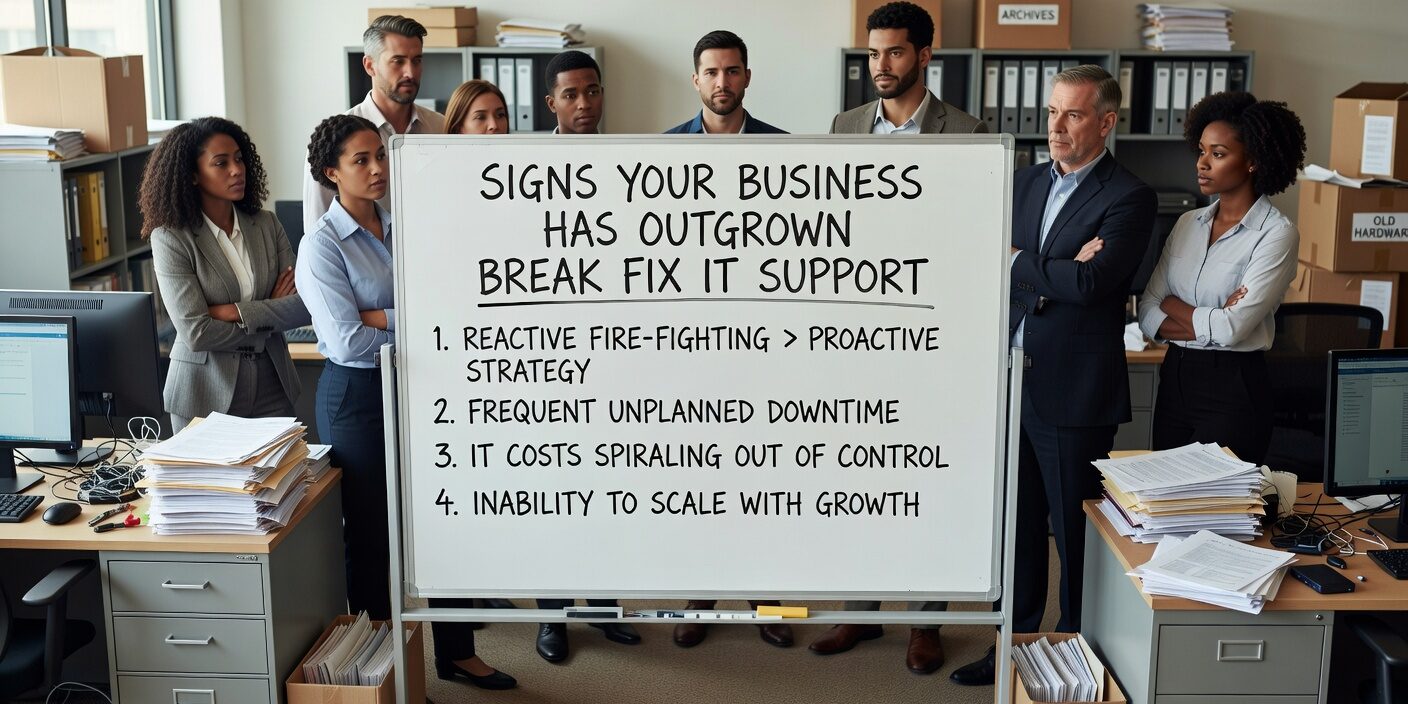
Many growing businesses start with break-fix IT support because it seems cost-effective and simple. When you only have a few computers and occasional tech issues, paying for support as needed makes sense. But as your operations become more complex and technology-dependent, signs your business has outgrown break fix IT support become increasingly clear—and ignoring them can hurt productivity, security, and growth.
Here are the key indicators that it’s time to move beyond reactive IT support to a more strategic approach.
Your IT Problems Have Become Business Problems
Downtime Is Happening Too Often
With break-fix support, you only call for help after something breaks. This works fine when outages are rare and brief. But if your team is dealing with system issues multiple times per month—email down, Wi-Fi dropping, applications crashing—the cumulative impact becomes significant.
Look for these warning signs:
- Staff regularly say “I couldn’t work this morning because IT was down”
- Outages last hours instead of minutes
- The same problems keep recurring without permanent fixes
- Multiple people are affected every time something goes wrong
Support Response Times Don’t Match Your Business Needs
Break-fix providers typically work on a first-come, first-served basis without guaranteed response times. What used to be an acceptable wait might now be business-critical downtime.
If waiting several hours—or even a full day—for IT support means lost sales, frustrated customers, or employees unable to work, you’ve outgrown the break-fix model.
IT Costs Have Become Unpredictable
One of the biggest signs your business has outgrown break fix IT support is when technology expenses become impossible to budget. Emergency repairs, rushed hardware purchases, and urgent service calls create unpredictable spikes in IT spending.
This unpredictability makes financial planning difficult and often leads to:
- Higher total costs due to emergency pricing and expedited orders
- Budget surprises that strain cash flow
- Deferred maintenance that leads to bigger problems later
- Reactive purchasing instead of strategic technology planning
Growing businesses need predictable IT expenses to plan effectively and invest in the right technology at the right time.
Security and Compliance Have Become Critical
Your Business Handles Sensitive Information
As businesses grow, they typically handle more customer data, financial information, and confidential business records. Break-fix support focuses on fixing problems after they occur, not preventing security incidents.
Consider whether you need more than reactive support if:
- You store customer payment information or personal data
- Your industry has specific compliance requirements
- Customers are asking about your cybersecurity measures
- A data breach would seriously damage your reputation or operations
Backup and Recovery Are Unclear
Many businesses discover their backup situation is inadequate only during an emergency. If you’re not certain about how much data you’d lose or how long recovery would take after a major incident, your current approach isn’t sufficient for business continuity.
Your Technology Environment Has Grown Complex
Break-fix support works well for simple environments with minimal interdependencies. But modern business technology creates complex relationships between systems that require ongoing management.
Multiple Connected Systems
If your business now relies on:
- Cloud services like Microsoft 365 or Google Workspace
- Customer relationship management (CRM) systems
- Industry-specific software applications
- Remote work tools and secure access
- Multiple office locations or significant remote staff
These interconnected systems need proactive monitoring and management to work reliably together.
IT Decision-Making Lacks Direction
With break-fix support, you typically don’t receive strategic guidance about technology planning. If you’re making IT decisions reactively—buying hardware during emergencies or adding software without considering integration—you may benefit from more comprehensive IT guidance.
Your Team Is Spending Too Much Time on IT Issues
One clear sign you’ve outgrown break-fix support is when non-IT staff become informal technical support. This hidden cost includes:
- Managers troubleshooting Wi-Fi, printer, or software problems
- “Tech-savvy” employees spending work time helping colleagues
- Productivity losses while staff wait for or work around IT problems
- Inconsistent processes that depend on individual knowledge rather than documented procedures
This informal IT support is expensive in terms of lost productivity and creates risks when key people are unavailable.
Growth Initiatives Are Being Slowed by IT Limitations
Perhaps the strongest indicator that you need more than break-fix support is when technology becomes a bottleneck to business growth.
This might look like:
- Slow employee onboarding because setting up accounts and devices takes days
- Delayed projects because current IT infrastructure can’t support new initiatives
- Avoided opportunities because you’re not confident your technology can handle increased demands
- Customer service issues when IT problems affect your ability to serve clients effectively
When IT support shifts from enabling business growth to constraining it, reactive support is no longer adequate.
What This Means for Your Business
Recognizing these signs early helps you make proactive decisions about IT support before problems become crises. The transition from break-fix to more comprehensive IT support typically involves:
Preventive maintenance that reduces downtime and extends equipment life, predictable monthly costs that make budgeting easier, documented processes that don’t depend on individual knowledge, strategic planning that aligns technology with business goals, and faster response times with clear service level agreements.
The goal isn’t necessarily to eliminate all IT issues, but to minimize their business impact and ensure technology supports rather than constrains your operations.
If you’re experiencing multiple signs that your current IT support approach isn’t keeping pace with your business needs, it may be time to explore IT support strategy for small businesses that can grow with your operations and provide the reliability your team depends on.
READY TO EXPLORE MORE COMPREHENSIVE IT SUPPORT? Contact TECHZN to discuss how proactive IT management can reduce downtime, improve security, and support your business growth. Our team helps Dallas and Austin businesses transition from reactive IT support to strategic technology partnerships that enable rather than constrain growth.